
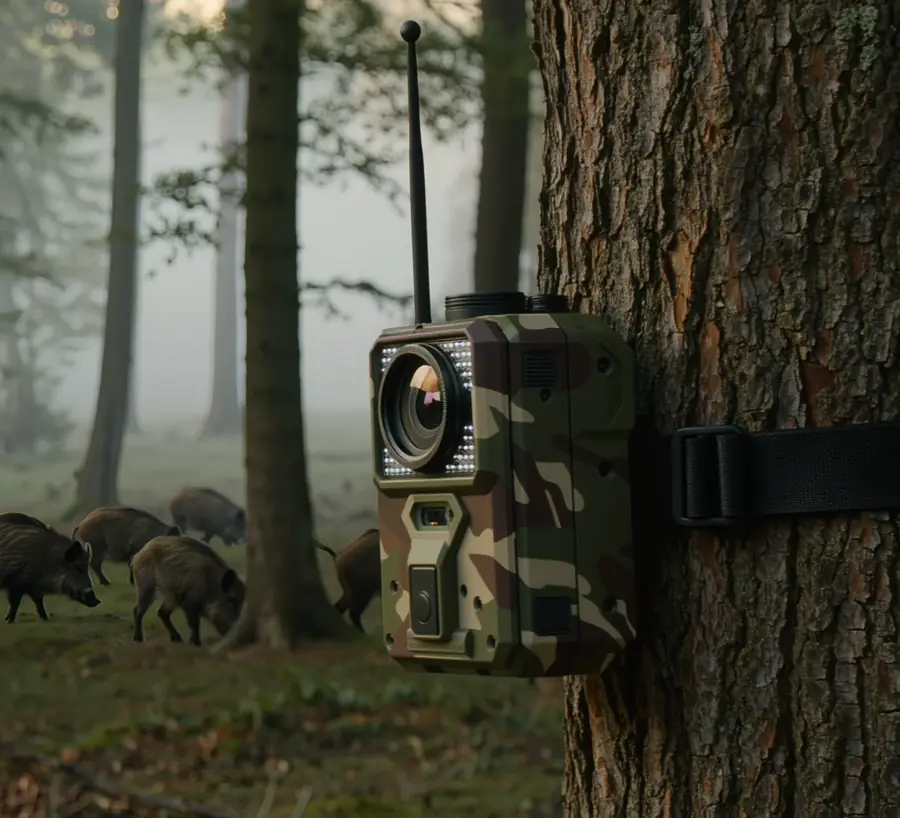
Trail Camera Buying Guide
How to choose in 2026
What to film, the points to compare and our quick recommendations before you buy.
Start with what you want to film
- Garden wildlife (foxes, badgers, hedgehogs, birds): a simple SD card camera or a WiFi model is usually enough.
- Remote woodland, fields, deer: a 4G cellular camera saves trips, and solar power keeps it running.
- Security of a yard, barn or site: a 4G camera with no-glow infrared sends you an alert and stays discreet.
- Birds at the feeder: a bird feeder camera films them up close and sends the clips to your phone.
The 6 points to compare
1. How you get the photos
SD card models store everything on the card: no running cost, but you must visit the camera. WiFi models send pictures to your phone within WiFi range, usually in the garden. 4G cellular models send them anywhere with mobile signal, using a data SIM card.
2. Night vision
All trail cameras film at night in black and white using infrared. Low-glow (850nm) LEDs show a faint red glow and light a little further; no-glow (940nm) LEDs show nothing, which is more discreet. Check the night range in metres on each product page.
3. Trigger speed and detection
The trigger speed is the time between movement and the photo. Under 0.5 seconds is good for animals on the move; 0.1 to 0.3 seconds catches fast species. A wider detection angle covers more ground but can also pick up moving branches.
4. Image quality
Look at the video resolution (1080p, 2K, 4K) more than the photo megapixels, which are often boosted by software. A good lens and good infrared matter as much as the numbers.
5. Power
AA batteries suit cameras you visit often. For 4G cameras and remote sites, a solar trail camera or a solar panel accessory reduces battery changes a lot.
6. Weatherproofing
Check the IP rating on the product page (IP65 or IP66 is common). Mount the camera under a little shelter where possible and check the seals before winter.
Quick recommendations
- First camera for the garden: garden wildlife cameras.
- Photos on your phone from anywhere: 4G cellular trail cameras.
- Discreet filming at night: night vision wildlife cameras.
- Sharpest footage: 4K and high-resolution trail cameras.
Before you set it up
Use a good quality microSD card of the size the camera accepts, fresh lithium batteries in winter, and read our guide on how to use a trail camera.
A question?
Write to us about anything on this page: we reply by email.