
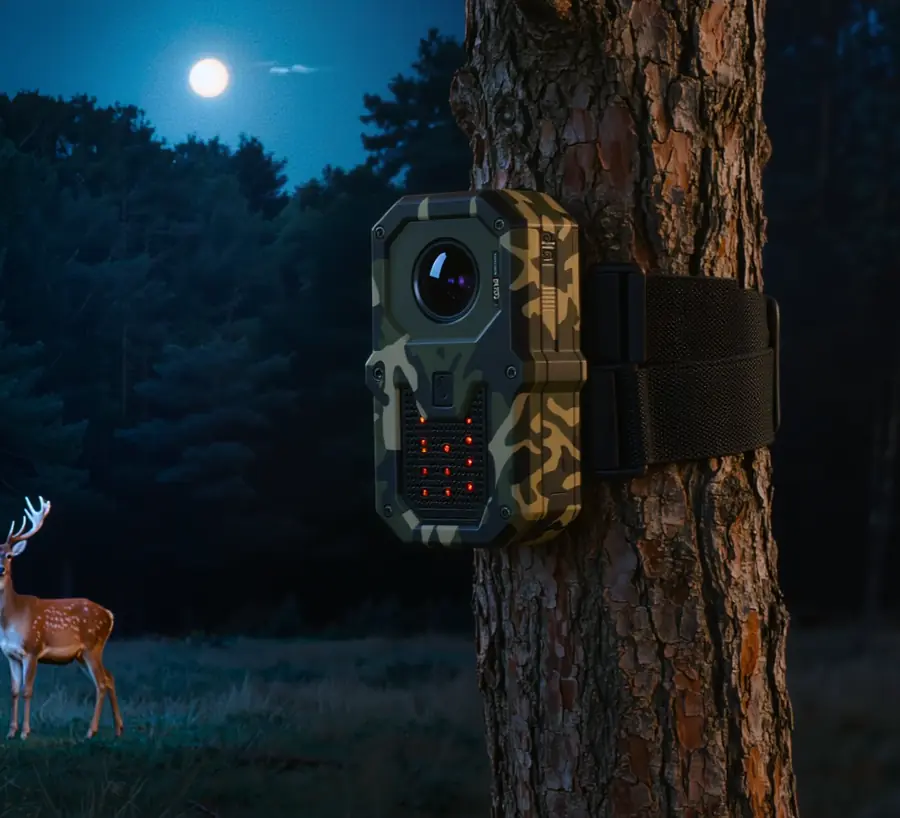
How to Use a Trail Camera
Set-up tips that work
Spot, height, settings and checks: the method to get useful photos and videos from the first night.
Choose the right spot
- Look for signs of passage: worn paths, gaps in hedges and fences, droppings, feeding areas, water.
- Aim the camera along the path at an angle rather than straight across it: animals stay in the frame longer.
- Face north or south if you can, so the rising or setting sun does not shine into the lens and trigger false photos.
Get the height and distance right
- Hedgehogs, foxes, badgers: about 30 to 50 cm from the ground.
- Deer: about 80 cm to 1 metre, slightly angled down.
- People and vehicles: 1.5 to 2 metres, angled down, out of easy reach.
- Keep the subject within the night range given for your camera, usually 3 to 15 metres.
Clear the view
Cut back grass, leaves and small branches in front of the camera. Moving vegetation is the main cause of empty photos, and close leaves reflect the infrared at night and wash out the picture.
Pick the settings
- Mode: photo, video or both. Short video clips (10 to 20 seconds) show behaviour well without filling the card.
- Sensitivity: high for small animals, medium in windy or busy places.
- Interval: the pause between two triggers. Short for wildlife, longer to save battery and storage.
- Time stamp and date: set them so you can see when animals pass.
Test before you leave it
Walk in front of the camera at the distance you expect animals, then check the pictures on the screen or in the app. Adjust the angle and try again.
Look after it
- Use lithium batteries in cold weather or a solar panel.
- Format the SD card in the camera, not on a computer.
- Wipe the lens and check the seals regularly.
- Secure the camera with a strap and, in public places, a security cable or housing.
Respect wildlife and privacy
Avoid disturbing nests and setts, and do not point a camera at a neighbour's property or a public path. Choosing a camera? See our trail camera buying guide.
A question?
Write to us about anything on this page: we reply by email.