
Alkaline AA Capacity: What mAh Means in a Trail Camera
An alkaline AA usually carries a printed capacity of around 2,000 to 3,000 mAh, but a trail camera will rarely get all of it. That figure comes from a light, steady test load. A camera pulls short, sharp bursts of current when it wakes, fires the infrared and writes to the card, and the cell gives up less under those demands, especially in cold weather.
This guide is for anyone who leaves a camera by a sett, a barn door or a field gate for weeks at a time, from gardeners to farmers and deer managers. You will learn how to read the numbers on a pack, estimate how long a set of cells will last, and choose settings that cut down on trips to swap them. It also covers when solar power makes more sense than fresh batteries.
In short
- Alkaline AA capacity is quoted in mAh or Wh, and the figure depends heavily on how fast the device draws power.
- A trail camera has a low standby draw but sharp spikes when it triggers, so settings matter as much as the battery.
- Cold weather, infrared flash, video length and Wi-Fi or 4G all shorten battery life.
- Solar charging can take the strain off batteries on cameras that support external power.
What is the capacity of an alkaline AA battery?
The capacity of an alkaline AA battery is the total electrical charge the cell can deliver before it is spent, and it is printed on the pack in milliamp-hours (mAh) or sometimes watt-hours (Wh). A figure of 2,000 mAh, for example, means the cell could in theory supply 100 milliamps for twenty hours, or 200 milliamps for ten. Wh multiplies that charge by the voltage, so it describes energy rather than charge alone.
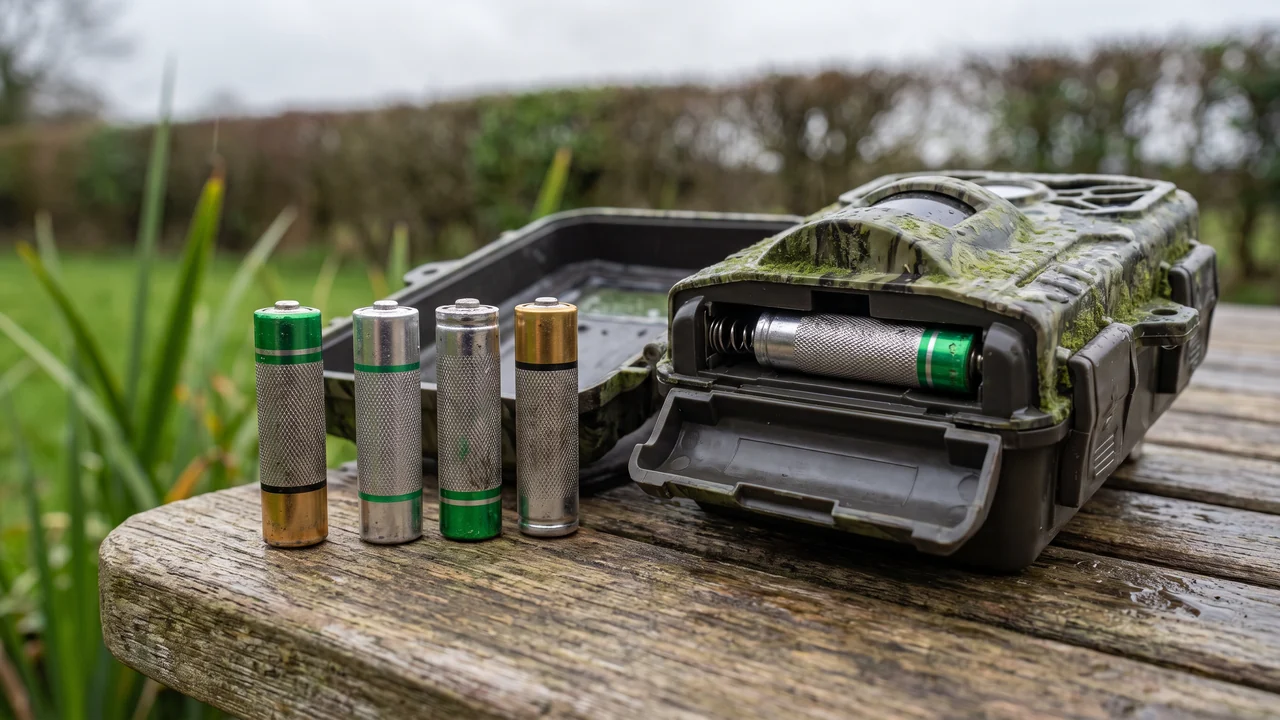
A fresh alkaline AA sits at about 1.5 V. That voltage does not hold steady. It slides downward as the chemistry is used up, and a camera stops working when the voltage drops below the level its electronics need, even if the cell still holds some charge. This is why "dead" cells pulled from a camera can sometimes still run a torch for a while.
The printed number comes from standard lab conditions: a set temperature, a fixed and fairly gentle load, and a chosen cut-off voltage. Outdoors, a trail camera rarely sees any of those conditions. Capacity also depends on how the load is drawn. A slow, light drain gives more usable energy than a heavy one, so the same cell delivers less in a camera that fires bursts of video than in one that mostly sleeps.
Exact figures also vary between makers and between product lines. Read the pack, and treat any rule of thumb you have heard as a rough starting point rather than a promise.
mAh versus Wh: which figure should you trust?
Trust watt-hours when you compare cells, because they include voltage and milliamp-hours do not. A capacity figure in mAh only says how much charge a cell holds. Energy is charge multiplied by voltage, so two cells with the same mAh can store different amounts of energy if their voltages differ. The calculation is simple: mAh × volts ÷ 1000 = Wh. A trail camera that takes four or eight AA cells uses energy, not just charge, so Wh gives a fairer comparison.
| Cell type (typical nominal figures) | Voltage | Example mAh | Wh (calculated) |
|---|---|---|---|
| Alkaline AA | 1.5 V | 2,500 | 3.75 |
| NiMH rechargeable AA | 1.2 V | 2,000 | 2.40 |
| NiMH rechargeable AA | 1.2 V | 2,500 | 3.00 |
| Lithium AA (non-rechargeable) | 1.5 V | 3,000 | 4.50 |
The examples are round numbers to show the method, not measured results. Check the figures printed on your own pack. A NiMH cell with the same or a slightly higher mAh number can still hold less energy than an alkaline, so a bigger number does not guarantee longer life in the field. Cameras also differ in how they cope with falling voltage, and some stop working while the cells still hold charge.
Be wary of "up to" claims. They usually come from a light, steady load at room temperature. Look for the stated test conditions: the current drawn, the temperature and the cut-off voltage. If the pack does not give them, treat the number as a rough guide only.
Why alkaline AA capacity drops in a trail camera
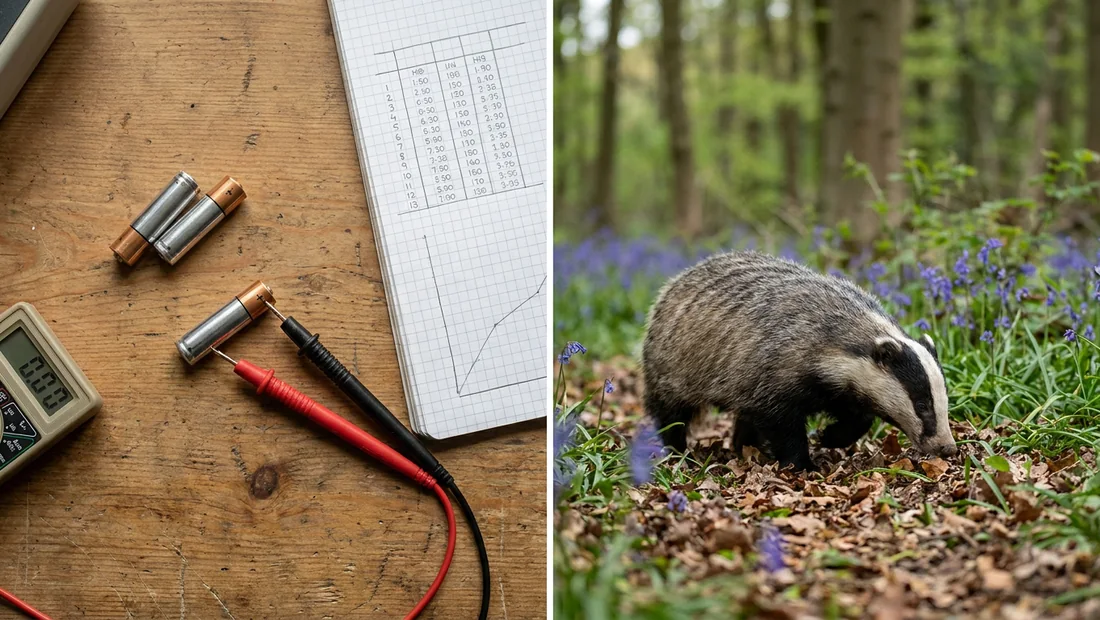
The figure printed on the pack is measured in a lab at room temperature with a gentle, steady load, so a camera in a hedgerow will rarely get that full alkaline AA capacity out of the same cells.
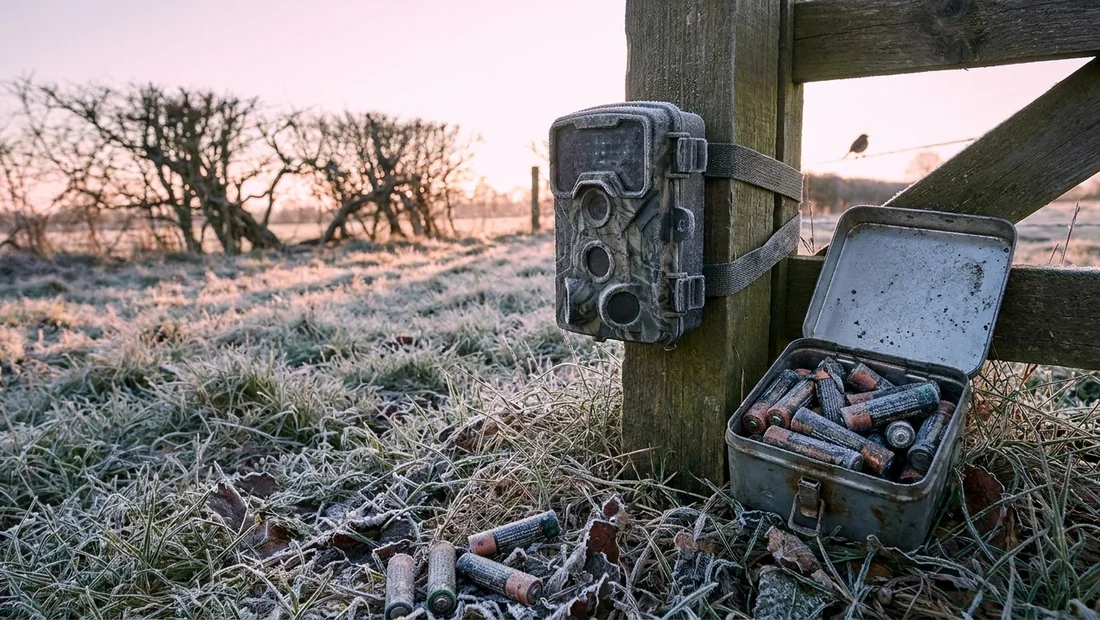
- Cold nights cut what alkaline cells can deliver because the chemistry slows as the temperature falls, so a set that copes in September may fade quickly in a frosty January.
- Standby costs very little, but every infrared flash and video clip pulls a much larger burst of current, and that is what eats into the printed mAh figure.
- A busy site makes the problem worse, since swaying brambles, long grass or a branch in front of the lens can trigger the camera hundreds of times a night with nothing worth filming.
- Voltage sag means the camera can shut down while the cells still hold some charge, because alkaline voltage falls steadily as the cell empties, and the camera needs a minimum voltage to run the flash and write to the card.
- Mixing old and new cells, or different brands, shortens life because the weakest cell drags the rest down, and a fully drained cell can leak, which damages the battery contacts.
If your camera uses a no-glow flash, the draw is usually lower than with a white flash, but infrared still adds up over a long night. Our guide to night vision wildlife cameras explains the flash types.
Camera settings that stretch a set of AA batteries
Choose photo mode over long video
Video keeps the processor, sensor and infrared array running for the whole clip. A burst of two or three photos costs far less. Use short clips of 5 to 10 seconds only where movement matters, such as a badger sett entrance, and keep photo mode everywhere else.
Set a trigger delay and lower the sensitivity
A delay of 30 seconds to a minute stops a fox loitering at a feeder from filling the card and draining the cells. In an exposed hedgerow or on a windy ridge, drop the sensitivity one step. Fewer false triggers mean the camera wakes less often, which saves power.
Aim away from grass and branches
moving vegetation is the most common cause of empty frames. Point the camera along a path or fence line rather than across a bramble edge. Cut back the foreground at knee height, and avoid facing the low morning sun, which can also trigger the sensor.
Shorten the infrared range
No-glow infrared uses more power the further it has to reach. If the target is a gap in a hedge 6 metres away, there is no need to cover 20 metres. Mount the camera low, close to the route, for badgers and hedgehogs. If you are choosing a camera, our 64MP trail camera with no-glow night vision and SD card is one option.
Switch off the screen and unused wireless
A viewing screen is handy when you aim the camera, but leaving it awake wastes charge. Check the framing, then power down the preview. Keep on-site review brief. Turn off Wi-Fi or any other wireless feature you are not using that week.
Fit fresh alkaline AA cells together and date them
Never mix old and new AA cells, or different brands, in one set. The weakest cell drags the rest down and can leak. Load a full set of fresh batteries at once, then write the date on a strip of tape on the camera body. At the next visit you will know how long that set lasted in that spot.
WiFi and 4G cameras: the extra power cost
A connected camera drains its batteries faster than one that only saves to a card. Every upload means switching on a modem or radio, finding a connection and sending the file, and that costs far more energy than writing a few megabytes to an SD card. A 4G model also keeps its modem ready between triggers so it can receive commands, which adds a slow background drain on top of each photo sent.
Send stills, not every video clip. A short clip can be many times the size of a photo, so each upload keeps the modem working for longer. A sensible compromise is to have the camera send one photo per trigger and record video to the card only. You can then pull the full footage when you next visit. Many 4G trail cameras let you set this in the app or menu. With a Wi-Fi model such as our 4K Wi-Fi trail camera with no-glow night vision, power use stays lower if you connect only when you want to review files rather than leaving the link active.
Weak signal shortens battery life noticeably. A camera in a weak spot repeats its attempts to connect and send, and each retry uses charge. Test the signal at the exact mounting point, not at the gate. Moving the camera a few metres, or to a higher branch on the side facing the nearest mast, can help. Dense woodland and deep valleys are the usual trouble spots.
Check the maker's stated battery type and cell count for your model before you load it. Connected cameras often call for more AA cells than a basic card-only unit, and fitting fewer or mixing types can cut running time sharply.
When to add solar power instead of swapping batteries
Solar power makes sense when a camera sits somewhere you do not want to visit often. Every trip to swap cells can bring scent and noise to the area around a sett, a deer trail or a hedge with a nesting bird. Fewer visits mean less disturbance, and a camera that stays powered through a long standby spell is more likely to catch the badger that only turns up every ten days.
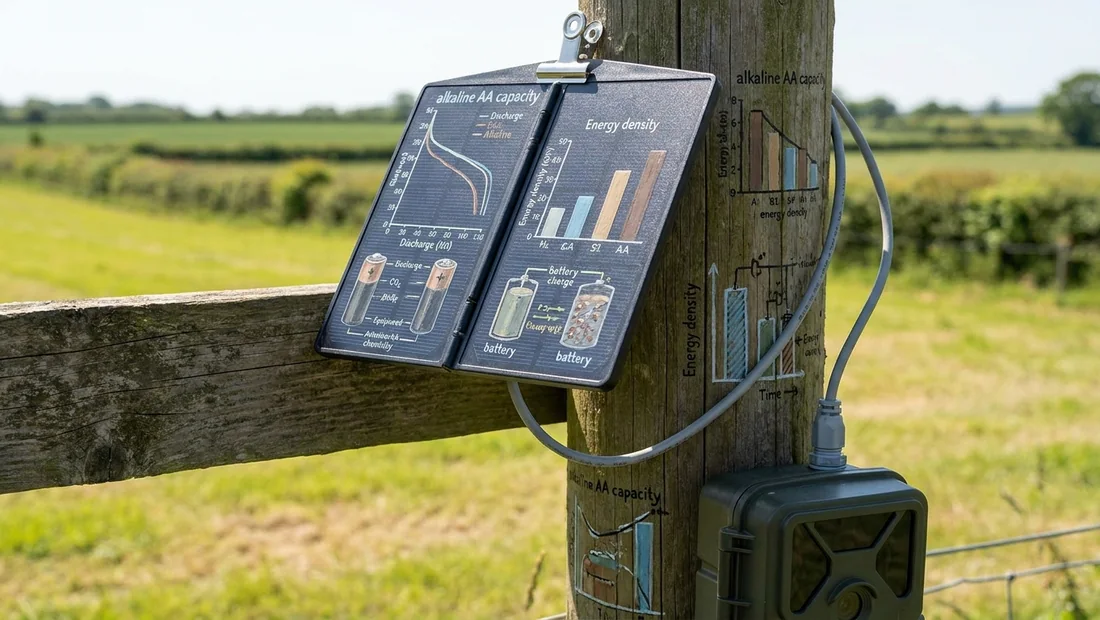
Check the camera first. A panel only works if the camera has an external power input, usually a small DC socket or a dedicated solar port. Read the manual for the voltage the socket expects before buying anything. A foldable 5V 2.5W waterproof solar panel suits cameras built for that input, and a camera with the panel already designed in, such as the solar trail cameras we stock, removes the guesswork. Even with a panel connected, keep AA cells in the camera as a backup for dull weeks.
Placement decides how well the panel performs. Face the panel south and tilt it steeply so rain runs off, and keep it clear of branches, bracken and the shadow of a trunk. Winter sun in the UK is low, so a panel that looks fine in June can sit in shade by December. Run the cable tight along the post or trunk with ties, leave a small drip loop below the socket, and use a weatherproof lead such as the waterproof DC cables so the join does not corrode.
It also suits farm gateways and feeders, where a busy yard makes regular visits a chore. When you do swap AA cells, take the spent ones out promptly, because old alkaline cells can leak and ruin the battery contacts. Do not bin them with household rubbish. Many supermarkets and council recycling points accept used batteries.
Our picks
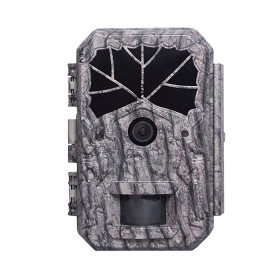
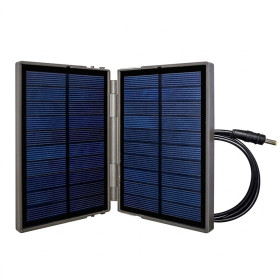
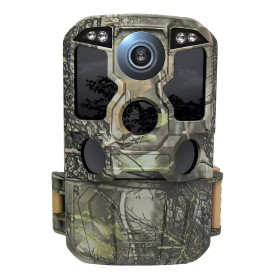
Treat the mAh figure on an alkaline AA as a best-case number, because a camera that fires the infrared flash on cold nights will often deliver less. The most useful habit is to cut the draw first: shorter video clips, a longer trigger delay and no unneeded Wi-Fi or 4G checks. If you still change batteries every few weeks, a camera with external power may suit your site better, and you can look at solar trail cameras when you are ready.
Spend less time changing batteries
Browse solar trail cameras and panels for sites you would rather not visit every few weeks. Delivery is free and tracked, with a 30-day money-back guarantee.
View Solar Trail CamerasFrequently asked questions
How many mAh is an alkaline AA battery?
The figure is printed on the pack or the maker's datasheet, and it differs between brands and between tests. It is measured under a light, steady load. A trail camera pulls hard when the flash fires or a video records, so the usable capacity is lower. Treat the headline figure as a maximum, not what you will get in the field.
Does cold weather reduce alkaline AA capacity?
Yes. Cold slows the chemistry inside the cell, so it delivers less energy and the voltage sags sooner. That matters on frosty UK nights, when a camera may stop early even though the cells still feel usable. Fit fresh batteries in winter and mount the camera somewhere sheltered, such as the lee of a trunk.
How many AA batteries does a trail camera need?
It depends on the model, so read the specification or the label inside the battery compartment. Many cameras take several cells, and they expect the full count. Loading fewer, or leaving a slot empty, can cause poor performance or no start-up at all. Always match the number and the orientation shown.
Can I mix old and new AA batteries in a camera?
No. The weaker cells drag down the whole set, so the camera cuts out early and the new batteries are wasted. Mixing also raises the risk of leakage, which can ruin the contacts. Replace every cell together, and use the same brand and type in the compartment.
Can a trail camera run on solar power?
Some can, through an external panel. First check that your camera has a suitable power input, and note the voltage it expects. Then choose a panel and cable that match that input. A panel usually tops up a rechargeable battery pack, so check that your camera supports one. Position the panel in clear light, outside the camera's field of view, and keep the lead tidy.
Related posts
 Deer Management: Counting and Monitoring Deer with Cameras
 Badger Watching: How to See Badgers Without Disturbing Them
 Trail Camera SD Card Reader: View Photos on PC or Phone
 Trail Camera SD Card Not Reading? Fix It Step by Step
 Trail Camera SD Card Format: Step-by-Step Guide and Tips