
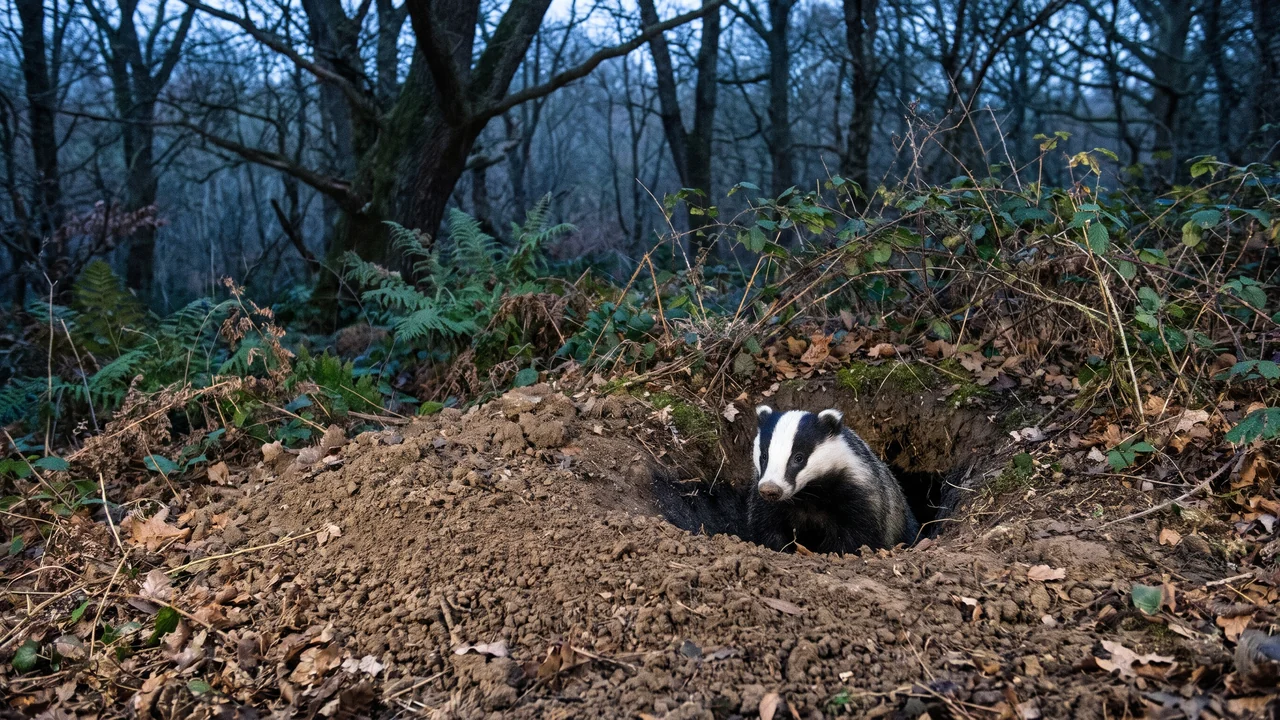
Badger Watching: How to See Badgers Without Disturbing Them
The best way to go badger watching without disturbing the animals is to place a trail camera on a well-used path or feeding area, well away from the sett entrances, and let the camera do the watching. A camera works all night, can be set up downwind of the path and keeps disturbance to a minimum, which a person waiting at dusk can rarely match.
This is written for garden watchers, landowners, farmers and anyone with a field edge or yard to observe. It covers how to read signs such as paths, latrines and snuffle holes, how to set a camera at the right height and angle, and how to stay within the law, since badgers and their setts are fully protected in the UK. By the end, you will know how to film badgers without causing them stress.
In short
- Badgers are most active from dusk to the small hours, so watch or film in that window.
- Stay downwind, keep still and never approach or block a sett. Setts are legally protected in the UK.
- A no-glow trail camera lets you see badger behaviour without lights or your presence.
- Fresh bedding, worn paths and dung pits show you where to place a camera.
What Is the Best Way to Watch Badgers in the UK?
The best way to watch badgers is to combine a guided first sighting with quiet watching on land you have permission to use, then let a trail camera cover the nights you cannot sit out. Each route suits a different situation, and none needs you to go near the sett.
An organised hide run by a local wildlife trust or badger group is the easiest way to see your first badger. Someone who knows the site picks the evening, sets up the feeding point and keeps the group quiet. Places are limited and hides can be a long drive away, so book early and expect to travel. If you have a garden, or a landowner has said yes to a field edge, you can watch quietly from a distance, downwind of the paths the animals use. Sightings can be hit and miss, but it costs nothing and helps you learn their routine.
A trail camera is the lowest-disturbance option. It sits still and makes no noise, and it records every night, which matters because badgers leave the sett from dusk and stay active into the small hours. You do not need to be there at all. In a garden, a compact wildlife camera is easy to set up. Choose one with no-glow infrared, so the flash does not startle the animals.
Whichever route you choose, badgers and their setts are protected by law in the UK. Never dig or block a sett, and do not disturb the animals inside it.
How to Find Where Badgers Live and Feed
Badgers leave clear signs, and reading them from a distance tells you where they live, where they feed and which routes they use.
- An active sett has several large, oval entrance holes, often wider than they are tall, with a broad spoil heap of fresh earth, stones and old bedding pushed out in front.
- Look for a flattened trail of dry grass, bracken or straw leading to a hole. Badgers drag bedding in and out, so fresh trailing material suggests the sett is in use.
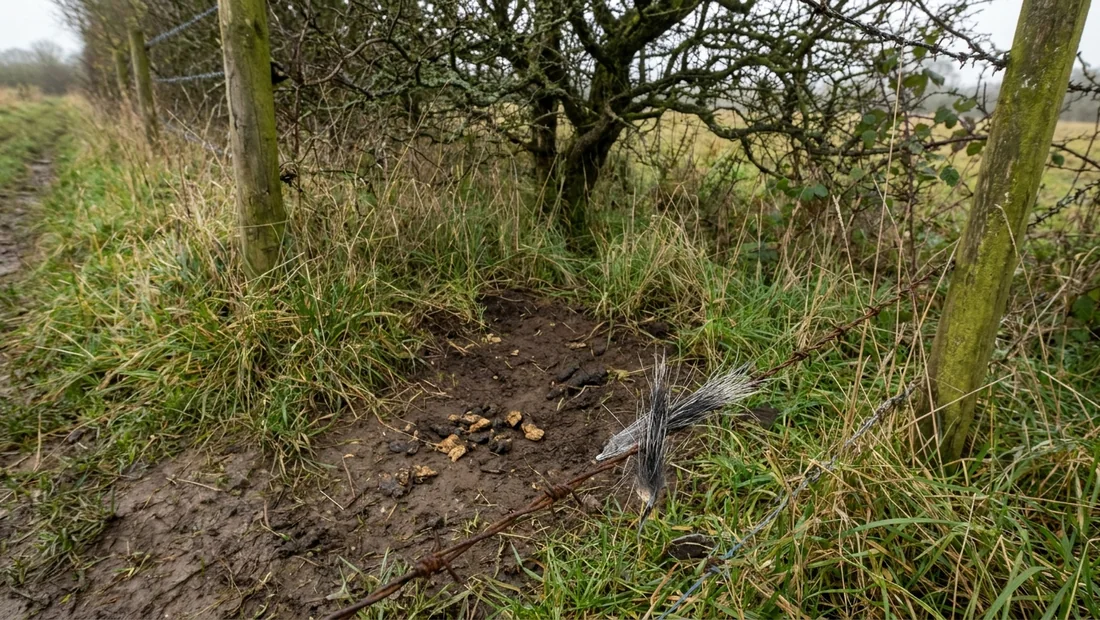
- Worn paths run through long grass and along hedge bases, and they pass under fences. They are usually about the width of a small dog and are used night after night.
- Dung pits are small, shallow scrapes with droppings in them, often placed near the edge of a territory or along field boundaries. A line of them can mark where one group's territory ends.
- Check tree trunks near the sett for long parallel claw marks. Grey-black hairs with a pale band, snagged on the bottom strand of a fence, show where a path crosses.
- Small cone-shaped holes in lawns or pasture are snuffle marks, left when badgers dig for earthworms and grubs. They show where animals feed.
- Stay well back from the sett and watch from a distance. Entering a sett, blocking a hole or digging nearby can disturb the animals, and interfering with a sett is a criminal offence under the Protection of Badgers Act 1992.
- Ask the landowner before you walk onto private land, and agree where you can go. Farmers and estates often know exactly which fields badgers use.
Badger Watching Tips: Timing, Wind and Staying Quiet
Badgers reward patience and a bit of planning. Most failed evenings come down to arriving late, standing upwind or making light or noise. Getting these right gives you a better chance of a sighting.
Arrive well before dusk
Be in position well before sunset, ideally an hour or more beforehand. Walk in slowly, pick your spot and then stay put. Badgers often wait underground until the light has dropped, and they can hear a late arrival from below.
Stay downwind
A badger's sense of smell is far sharper than its eyesight. Check the breeze by watching grass tips or dropping a pinch of dry grass. Sit so the wind blows from the sett towards you, and a little to one side of the main paths. If the wind swings, move quietly or call it a night.
Dress quietly and skip the scent
Wear dull greens and browns in soft fabrics that do not rustle. Stiff waterproof jackets are noisy. Leave off perfume and aftershave, and choose unscented soap. Food wrappers belong in a pocket.
Keep every light off
Leave the torch and the flash switched off. Dim the phone screen fully, or leave the phone in your bag. If you must use a light, choose a red-filtered one and point it at the ground, keeping it brief.
Pick the right season
Spring and summer evenings are usually easiest, because the weather is milder and the animals are more active. Cubs tend to be above ground from early summer, when there is more movement around the entrance. In winter, badgers are far less active and often stay below for long spells.
Leave quietly
Wait until the badgers have moved away from the sett, then back off slowly so they do not catch your scent. Do not shine anything their way. Never put food out near the sett, as it changes their behaviour and draws other visitors to the site.
Keep dogs at home
A dog's scent and noise can unsettle a whole social group. Please leave your dog at home, however well behaved.
Watching Badgers From Home With a Trail Camera
A trail camera lets you watch badgers on your own land night after night without being there. It watches the paths while you stay indoors, so the animals carry on as normal. Choose a no-glow model with 940nm infrared. Standard infrared cameras show a faint red glow that some animals notice, and a white flash can make them bolt or avoid the spot. A 940nm emitter gives off no visible light, so the badgers are not lit up. The picture is slightly darker and the range slightly shorter, which is a fair trade-off. See our night vision wildlife cameras for the available options.
Mount the camera at about knee height, roughly 30 to 40 cm off the ground, and tilt it slightly down along a worn badger path. Badgers are low and stocky, and a camera set at chest height will miss them. Put it a few metres from the sett, never aimed straight at the entrances. A camera right at the holes brings you too close to the animals and puts pressure on a protected site. Choose a path they use to reach feeding areas. Before you leave, cut back the grass and bracken in front of the lens. Moving stems trigger the sensor in a breeze and fill the card with empty clips.
Set the camera to video with a short clip length, around 10 to 20 seconds. A single photo shows that a badger passed. A clip shows it scent-marking, foraging, scratching or moving cubs, which is the interesting part. Then leave it alone. Every visit leaves human scent and disturbance, so check the card once every two weeks or so, and go in daylight. A trail camera with a viewing screen lets you review clips on the spot without carrying a laptop. If your garden is the study site, garden wildlife cameras are a sensible starting point.
Which Trail Camera Suits Badger Watching?
Pick the camera by where the sett or feeding area is and how often you can walk out to it. For a garden or a field edge you pass every few days, an SD card camera with no-glow night vision does the job. Badgers are nocturnal and easily spooked, so a 940nm no-glow flash matters more than megapixels. A visible red glow or white flash may put them off a regular route.
| Situation | Best fit | What to check |
|---|---|---|
| Garden or site you visit weekly | 64MP trail camera with no-glow night vision and SD card | Trigger speed, 1080P video, a small screen to check the angle on the spot |
| Remote field or woodland edge you rarely visit | 4G cellular trail camera with 940nm no-glow flash | A mobile data plan and a signal at the site. Fewer visits mean less scent and disturbance. |
| Long stay, such as a whole season | Solar trail camera | Mount where the panel gets daylight, clear of branches and shadow |
| Fast-moving badgers along a path | A trail camera with a quick trigger speed and a video mode | Short trigger time, so you catch the whole animal rather than just its tail end |
A built-in screen is worth having. It lets you check the framing beside the sett without walking back and forth, and every extra trip leaves scent. Keep the camera well back from any sett entrance, on a trail or feeding spot instead. Badger setts are legally protected, so never position anything that could block or disturb a hole.
Protecting Your Camera and Keeping the Site Safe
Fix the camera firmly, keep it out of sight and check it as rarely as you can.
- Strap the camera to a sturdy trunk or a solid fence post, because a thin sapling sways in wind and triggers false clips. Steel tree mount brackets let you fine-tune the angle and keep the lens low, roughly level with a badger's shoulder.
- Where theft is a risk, such as a footpath edge or a lane, fit a steel box and padlock. A green camouflage security box also helps break up the camera's outline, and a cable lock through the trunk makes it much harder to lift away.
- Damp sites are hard on batteries and connections. If you use an external power cable, keep it off the ground and run it through a sealed cable sleeve. A solar panel can top up the battery through winter, and the battery door seal should sit flat before you leave.
- Keep your visits short and check the camera once every week or two. Approach from a different side each time, since a worn track through the grass leads people and foxes straight to it, and badgers may start to avoid it.
- If the badgers keep their distance from the camera or turn back along the trail, give them a week or two to adjust, since they often dislike a new object on a regular route. If they still avoid it, move the unit a few metres.
More fixings and cases are listed under trail camera accessories.
Our picks
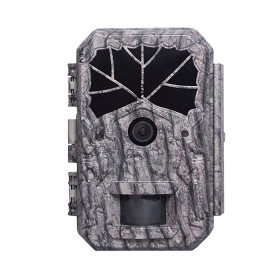

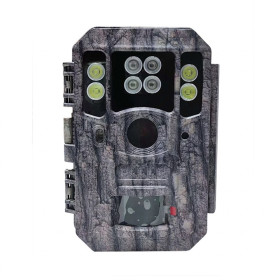
Set a no-glow trail camera on a worn badger path, low down, roughly 30 to 40 cm off the ground and angled slightly down, then leave the sett alone. Fresh tracks and active latrines (dung pits) show you where to aim. Staying downwind and out of sight gives the badgers the best chance of carrying on as normal. If you are ready to try it, our no-glow wildlife cameras are a good place to start.
Film Badgers Without Disturbing Them
Browse no-glow night vision wildlife cameras. Free tracked Royal Mail delivery on every order and a 30-day money-back guarantee.
View Night Vision Wildlife CamerasFrequently asked questions
What time of day is best for badger watching?
Dusk is best, and the hours after it. In summer, arrive an hour before sunset and settle quietly downwind of the sett. Badgers usually emerge as the light fades. In winter they may come out in full darkness, and during cold spells they can stay below ground for days.
Is it legal to watch badgers?
Yes, watching from a distance is legal. Anything that interferes with a sett is an offence under UK law, including blocking holes, digging, or disturbing the animals inside. Always get the landowner's permission before you go onto private ground. If you are unsure, ask your local badger group or wildlife trust first.
Where can I see badgers in the UK?
Your best option is a guided evening watch run by a local wildlife trust or badger group, often from a purpose-built hide. Some farms and nature reserves also offer paid watches. If you have permission, a landowner may also let you watch from a quiet spot on their land. Contact local groups for dates, as places often fill early.
Can I use a torch when watching badgers?
Avoid it. A bright beam can startle badgers and send them straight back underground. Let your eyes adjust to the dusk light and keep still. If you need a light, a red filter on a dim torch is gentler, though it is best kept for the walk in and out.
Will a trail camera scare badgers?
A trail camera can unsettle them at first, but a no-glow infrared model gives off no visible light. Mount it a few metres from the sett, off the main path, and angle it across a track rather than at an entrance. Keep checks to a minimum, because your scent and noise can disturb badgers more than the camera does.
Related posts
 Deer Management: Counting and Monitoring Deer with Cameras
 Alkaline AA Capacity: What mAh Means in a Trail Camera
 Trail Camera SD Card Reader: View Photos on PC or Phone
 Trail Camera SD Card Not Reading? Fix It Step by Step
 Trail Camera SD Card Format: Step-by-Step Guide and Tips