
How Long Should I Leave My Trail Camera Out?
Leave a trail camera out for at least two weeks at one spot, and up to four if the site is quiet. A single night rarely shows what lives there, because badgers, foxes and deer often skip a route for several days. Long runs only work if the batteries and card can last, so power and storage matter as much as timing.
This is for garden wildlife watchers, farmers, deer managers and anyone keeping an eye on a barn or field gate. It helps you pick a sensible deployment time for your site, work out why a unit might go flat or fill its card early, and set it up so it keeps recording useful footage from the first day to the last. Fresh lithium or good alkaline cells, a large formatted card and a short video length make the biggest difference.
In short
- Leave a trail camera out for at least two to three weeks in one spot before judging it, because wildlife needs time to return to normal after your visit.
- A camera rarely fails because it was out too long; it fails because of batteries, a full or slow SD card, condensation or false triggers.
- Match soak length to the animal: a week for hedgehogs and garden birds, three to four weeks for badgers and foxes, a full season for deer and security.
- Set the camera, walk away and leave it, since repeated visits are the biggest cause of empty footage.
How long should I leave my trail camera out?
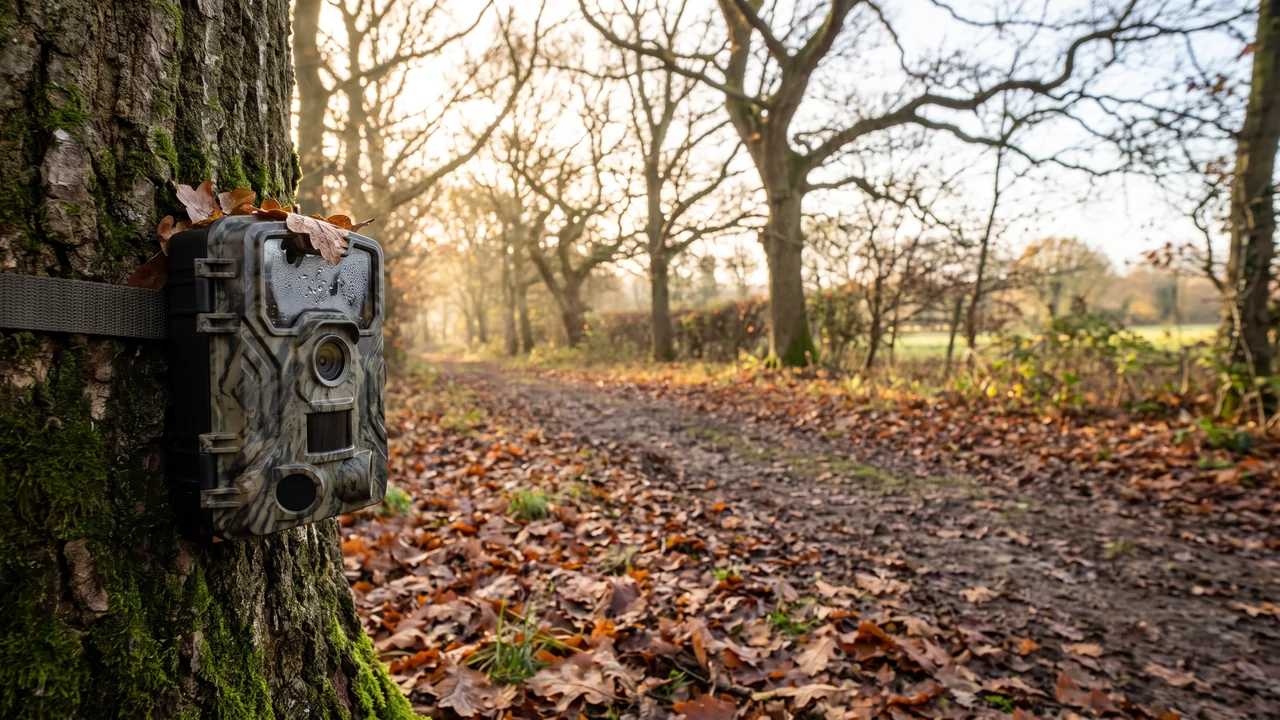
Leave a trail camera in one spot for two to three weeks as a minimum, and longer if you are after shy animals. The first night is rarely the best. You have just walked the area, left human scent on the post and the lens, and moved the vegetation around. Foxes and badgers often skirt a new object for a few nights before they walk past it normally. Deer can avoid a spot for longer. Footage from night one tends to show empty frames, a blurred tail or a single wary visit, and that says very little about what actually uses the place.
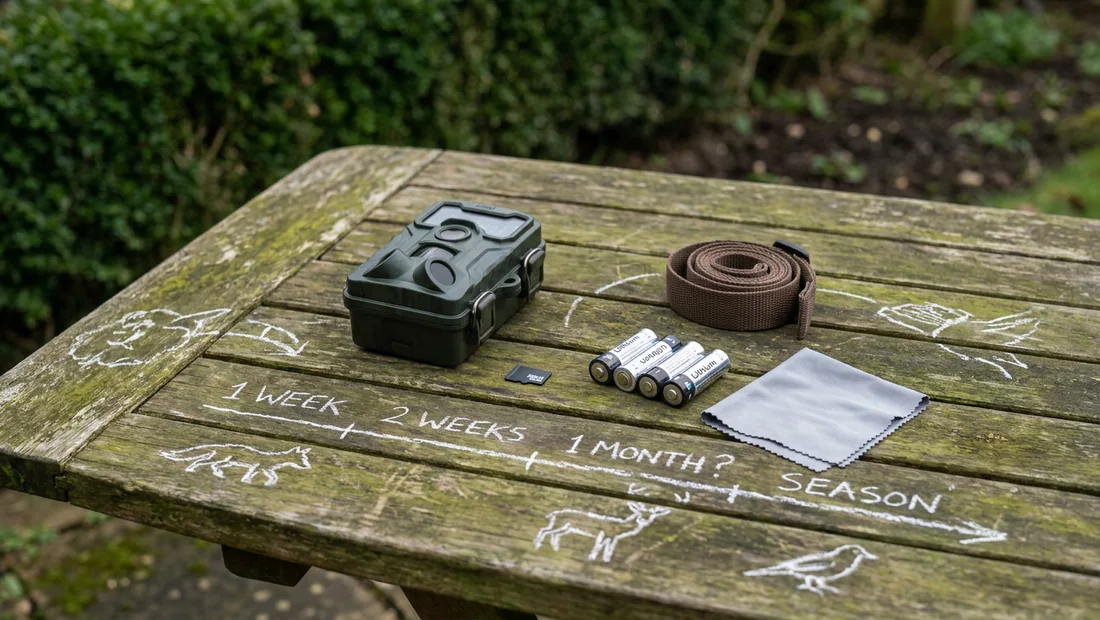
The right length also depends on what you want to film. A hedgehog may pass through every night, while a badger might only use a particular path every few days. The table gives sensible starting points for a fixed position. If you are choosing a model for the garden, garden wildlife cameras are built for exactly this sort of close, steady watching.
| Target | Suggested soak length | Why |
|---|---|---|
| Hedgehog | 1 to 2 weeks | Regular nightly routes in gardens, and they tolerate a camera well |
| Garden birds | 1 to 2 weeks | They get used to a feeder camera within a day or two |
| Fox | 2 to 3 weeks | Cautious of new objects at first, then follows the same routes |
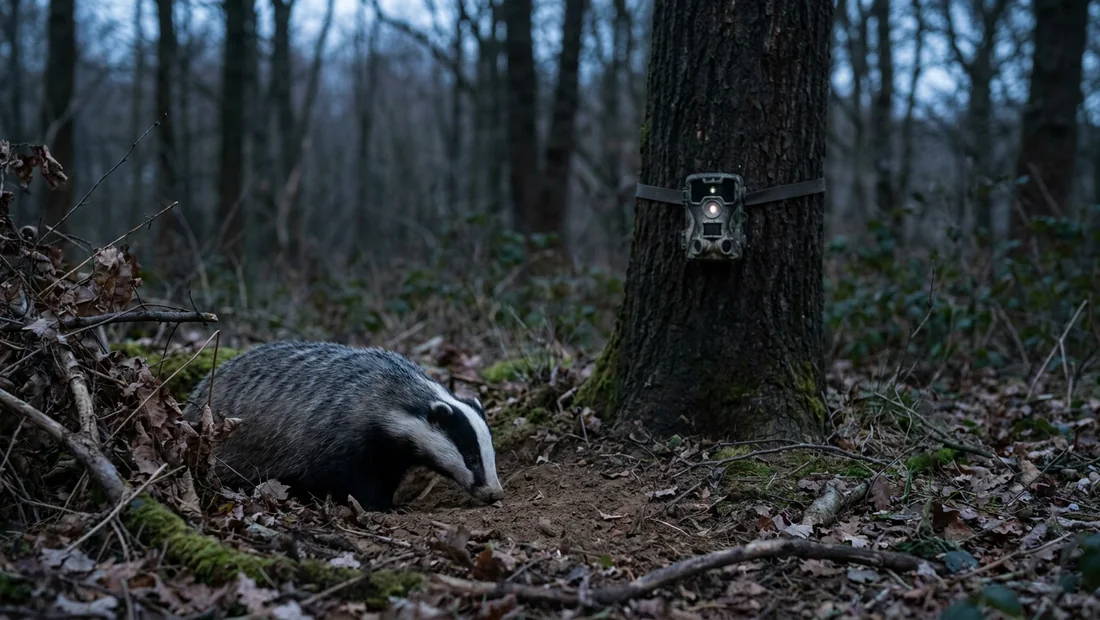
| Badger | 3 to 4 weeks | Visits can be irregular, and sett activity changes with the weather |
| Deer | 3 to 6 weeks | Wary, and may avoid the spot at first |
| Security (yard, barn, gate) | Ongoing | Needs constant cover, so power and storage matter most |
A camera left out for months works fine, provided the batteries and the SD card can last that long. If you plan a long stay, a night vision model with a no-glow flash, such as those in night vision wildlife cameras, is less likely to bother animals over many nights.
Why your trail camera keeps shutting off early
A trail camera that stops early nearly always has a fixable cause, and it is rarely the camera itself.
- Alkaline batteries lose voltage quickly in the cold, so a camera can read as flat on a frosty morning and then recover by afternoon; lithium AA cells hold their voltage far better below 5°C, and a solar panel with a rechargeable battery keeps topping up through the day.
- Standard alkaline cells such as the Energizer AA alkaline batteries suit short spells in mild weather, but do not mix old and new cells or different brands in one camera, because the weakest cell drags the rest down.
- A full or slow SD card makes the camera stop recording or miss triggers, so use a card with a fast write speed (Class 10 or better) and pick a size that matches your settings, since video at high resolution fills a small card in days.
- Format the card in the camera before each deployment, and avoid cards that have been used in a phone or a different device without a fresh format; a microSD card in 16GB to 256GB gives you room to choose.
- Condensation forms when a warm, damp camera sits in cold air overnight, and it can fog the lens, corrode the contacts and cause random shutdowns; check that the seal is clean and flat, close the housing in dry conditions, and add a small silica gel sachet inside.
- Moving branches, long grass and sun-warmed vegetation set off the sensor again and again, which empties batteries and fills the card with blank frames, so clear anything within a few metres of the lens and avoid pointing the camera at open sky or east and west light.
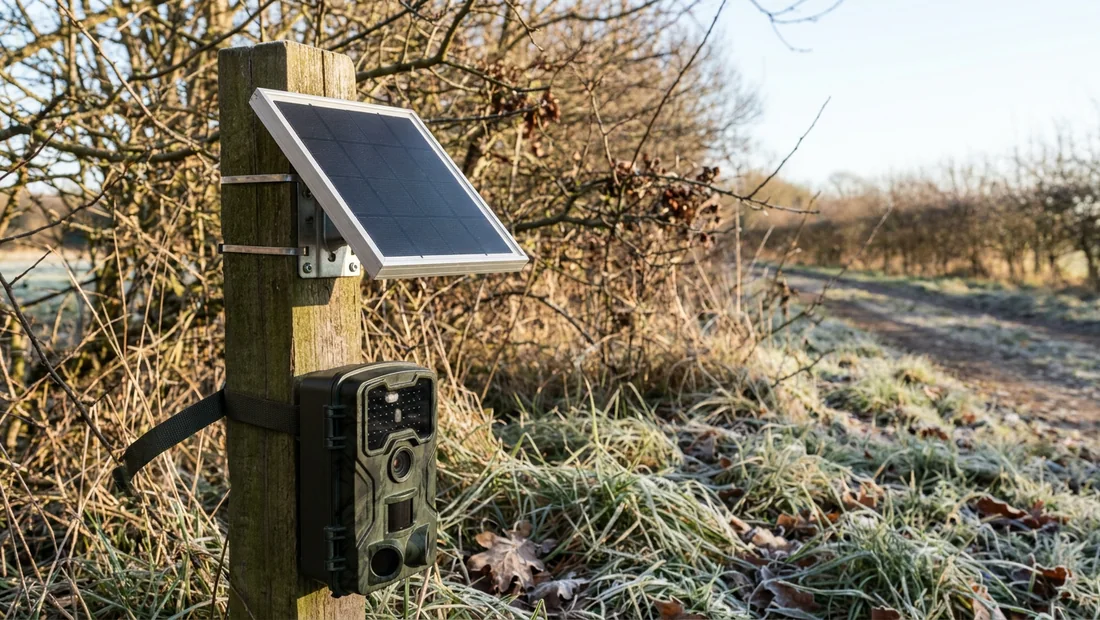
- A weak or mismatched power source can cause resets and sudden blackouts, so match the voltage the camera asks for and, for a fixed spot near a building, consider a mains adaptor with a 6V, 9V or 12V DC output rather than relying on cells.
How long do trail camera batteries actually last?
Nobody can give you one honest figure for trail camera battery life, because it swings with how often the camera triggers, how much of that happens in the dark and how cold the nights are. A camera on a quiet woodland edge in May may last for months on a set of AAs. The same camera on a busy badger path, or facing a lane with passing traffic, can flatten a set in a few weeks.
Night footage is the biggest drain. In the dark the camera fires its infrared LEDs for every photo or clip, and longer video clips keep them lit for longer. Daytime shots use the sensor and processor only. So a camera that records lots of 30-second night videos will empty its batteries far faster than one set to take a single photo. False triggers from moving grass or branches add to this, so clear the view in front of the lens before you leave.
Cold also cuts capacity. Alkaline cells lose a lot of their output near freezing, so for winter use lithium AAs are the usual choice. They cost more but cope far better with frosty nights. If you stay with alkaline, a fresh set such as the Energizer AA alkaline batteries suits mild weather, but expect a shorter run in the cold.
For a permanent spot, such as a yard, barn or feeding station, power it from outside. A solar trail camera setup keeps a rechargeable battery topped up, and separate units like the 6V to 12V solar panel with 3000mAh battery can be added to a compatible camera. Point the panel south, clear of shadow. To stretch ordinary batteries, switch off the time-lapse mode, drop video length to the minimum you need, lower the image resolution and set a trigger delay of a few seconds.
Setting up for a long soak: height, angle and settings
Set the height for your target animal
Waist to chest height suits foxes, badgers, roe deer and most visiting birds on the ground. For hedgehogs, drop the camera to 20 to 30cm and tilt it so the lens sits level with their backs. A camera set too high clips small animals out of the frame and only catches the tops of heads on larger ones.
Angle the lens down along the path
Point the camera slightly down and along a trail, fence line or hedge gap, not across it. An animal walking towards or away from the lens stays in the detection zone for longer. One crossing at right angles can pass through before the sensor reacts, which leaves you with a blurred tail or an empty frame.
Face the camera north or south where you can. Low sun rising or setting straight into the lens causes false triggers and washed-out pictures.
Clear the foreground
Cut back grass, bracken and loose twigs within a few metres of the lens. Moving stems trigger the sensor in any breeze, and a few days of this can fill an SD card with empty frames. Do the clearing when you set up, not later, so you don't disturb the spot mid-soak.
Choose settings for weeks unattended
Use photo mode with a burst of 2 or 3 images, or short video clips of 10 to 15 seconds. Set the trigger interval to 10 to 30 seconds at a busy spot, so one fox does not produce hundreds of near-identical frames. Choose no-glow infrared at night if you want to avoid spooking animals. A card of 32GB to 128GB is usually plenty at these settings. Format it in the camera before you start.
Mount it firmly
Strap the camera to a solid trunk, not a thin branch or a young tree that sways. A metal tree bracket with a ball head lets you fine-tune the tilt and then locks it, so wind does not slowly shift the aim. In places where theft is a risk, add a key-lock security cable around the trunk.
Should I check the camera while it is out?
Check the camera about once a week, and less often if the site is quiet and the batteries are fresh. Every visit leaves human scent on the tree, the ground and the camera itself, and a badger or fox that meets a new smell at its regular crossing point may change its route for a few days. Deer are quicker to notice than most. Constant checking can ruin the very footage you are trying to collect.
For most garden and woodland setups, a weekly swap of the SD card is plenty. Approach from downwind where you can, so your scent blows away from the trail. Keep the visit short: unlock, swap the card, glance at the battery indicator, check the lens is clear of cobwebs and leaves, then leave. Do your reading at home on a screen, not standing beside the camera. Avoid dawn and dusk visits, when most animals are moving.
If walking out to a field edge or a far corner of the land is a chore, or you want to disturb nothing at all, a cellular model sends pictures to your phone. Our 4G cellular trail cameras cover this, including the NaturaTrack 5K Solar 4G, where the solar panel helps keep the battery topped up between visits. You then only attend when the battery or card needs attention.
Leaving a camera out through winter and wet weather
A trail camera can stay out all winter, but expect a shorter run between visits. Cold cuts battery capacity, and alkaline cells suffer most, so a set of AAs that lasts six weeks in June may manage noticeably less in January. Fit fresh batteries before the first hard frost and plan to check them sooner than you would in summer. Lithium AAs hold up better in low temperatures, while Energizer AA alkaline batteries suit milder spells.
Condensation causes more winter failures than the cold itself. If you carry a chilled camera straight into a warm kitchen, moisture forms on the lens, the circuit board and inside the battery bay. Leave the case closed and let it warm up slowly in a porch or garage for an hour or two before you open it. Then wipe the lens with a microfibre cloth, check the rubber seal for grit or hair, and drop a fresh silica pack inside the housing before you put the camera back out. Dry the old packs on a radiator or in a low oven, following the maker's guidance.
Frost and snow change how the sensor behaves. A cold, clear morning can trigger the camera as the sun warms the ground, and falling snow often fills the card with blank frames. Aim the camera slightly downward, clear any grass or branches that will bend under frost, and consider lowering the sensitivity. Wet weather also favours a cover, and a steel security housing adds protection against knocks and theft as well. Other trail camera accessories are worth a look too.
When to move the camera somewhere new
Move the camera when a spot has stopped giving you anything new, not when a fixed number of days has passed.
- A week or more with no triggers, once you have ruled out flat batteries, a full card and a lens fogged by condensation, usually means animals have changed their route or the spot never suited them.
- Routes shift with the seasons, so a gap in a hedge that was busy with hedgehogs and foxes in summer can go quiet in November, while deer may start using a different field edge once crops are cut or the rut begins.
- Fresh ground is worth trying at a sett entrance, along a hedge line, at a gateway or beside a feeder, each of which gives a different set of visitors and a clear reason for animals to pass the lens.
- Garden watchers can swap a quiet lawn view for a pond edge or a bird table, and a bird feeder camera suits a spot where small visitors return again and again.
- Before you lift the camera, look for tracks, droppings, flattened grass or hair on wire, because these signs often show you where to point it next, usually a few metres from where it sat.
- Write down the date, location, height, trigger count and best clip for every soak, either in a notebook or in your phone, so the next placement starts from evidence and not guesswork.
- Change one thing at a time, such as the position or the angle, so you can tell which change made the difference, and check our garden wildlife cameras if the current model is the limiting factor.
Our picks
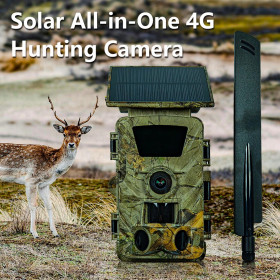
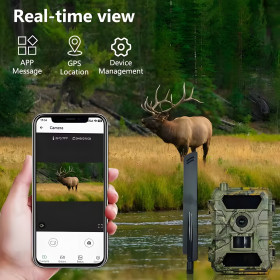

Set the camera, walk away and give it two to three weeks before you judge the spot, because every visit leaves a scent trail that keeps wildlife wary for days. Check the batteries and card before you leave, and let the footage arrive rather than going back to look. If you would rather skip the repeat trips, the NaturaTrack 5K Solar 4G Trail Camera sends images to your phone and tops up its own power, so it can stay put for a full season.
Set it up once and leave it out
A solar 4G camera keeps filming for weeks without a visit. Browse our solar and 4G trail cameras, add lithium batteries and a large SD card, and let it run.
View NaturaTrack 5K Solar 4G Trail CameraFrequently asked questions
Can I leave my trail camera out all year?
Yes, as long as you sort out power and storage first. Use solar or mains power, fit a large SD card, and mount the camera with a lock and strap. Even then, plan to visit every few weeks: wipe the lens, clear spiders and vegetation from the field of view, and check the seals for damp. Confirm the card has not filled up.
How long can a trail camera run on one set of batteries?
There is no fixed figure. Run time depends on how many triggers the camera gets, how much night footage it records, whether it shoots video, and the temperature. Cold drains cells quickly. Lithium AA batteries last longer than alkaline in winter, and a solar panel can keep a busy camera going for months.
Why does my trail camera keep shutting off?
The usual cause is weak batteries, especially alkaline ones in cold weather, which can read fine and then sag under load. Other causes are a full or slow SD card, damp inside the housing, and an external power supply with the wrong voltage. Swap in fresh lithium cells and a freshly formatted card first.
Should I check my trail camera every day?
No. Once a week is plenty for most setups, and every two to four weeks suits many sites. Each visit leaves scent and noise that can put animals off the spot. A 4G camera sends images to your phone, so you can see what is happening without walking out to it.
Is it legal to leave a trail camera out in the UK?
Yes, on your own land or with the landowner's permission. Keep the view to wildlife and your own property. Do not point it at neighbours' gardens, public footpaths or anywhere people expect privacy, as that can bring data protection issues. If a person is recorded by accident, delete the footage promptly.
Related posts
 Deer Management: Counting and Monitoring Deer with Cameras
 Badger Watching: How to See Badgers Without Disturbing Them
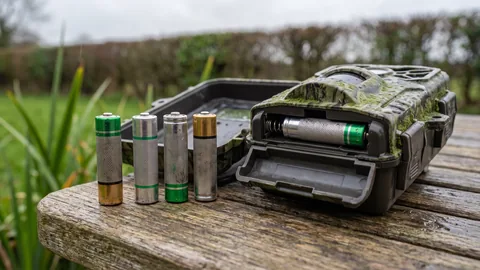 Alkaline AA Capacity: What mAh Means in a Trail Camera
 Trail Camera SD Card Reader: View Photos on PC or Phone
 Trail Camera SD Card Not Reading? Fix It Step by Step