
Can a Trail Cam Be Used as a Security Camera?
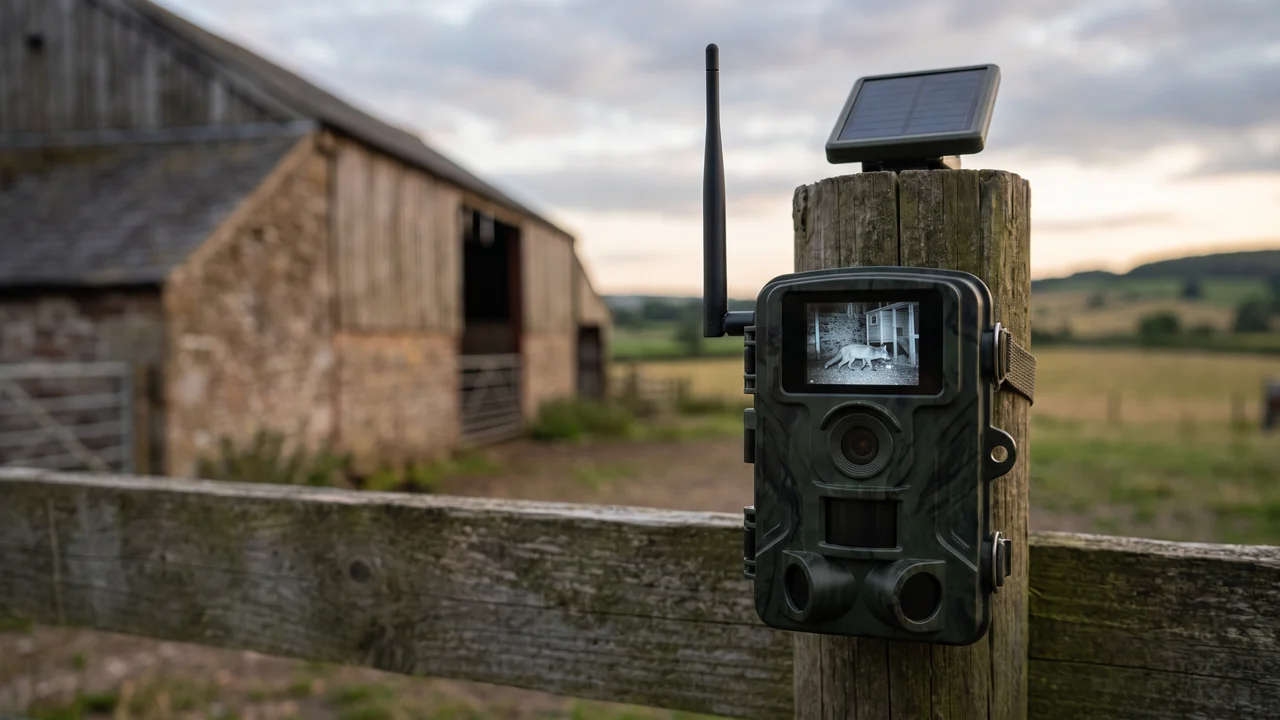
Yes, a trail camera can work as a security camera on remote land, in a barn or at a gate where there is no mains power or Wi-Fi. It records movement on battery, sits quietly out of sight and costs far less than a wired system. It will not give you live viewing or a constant recording, so it suits spotting trespass, theft and damage rather than stopping them.
This is written for farmers, landowners, deer managers and anyone with an outbuilding or field to look after. It helps you decide whether a trail camera fits your site, which features matter most (trigger speed, night range, cellular alerts), where to mount it, and how to stay on the right side of UK privacy rules.
In short
- Trail cameras can work as security cameras for remote or rural areas, but they have limitations: they are motion-triggered, not continuous, and may lack the instant alerts of dedicated systems.
- Choose a no-glow (940nm) model to avoid alerting intruders, and consider 4G for remote monitoring without Wi-Fi.
- Position cameras at height and angle them downward to capture people clearly and avoid false triggers from animals or weather.
- Always respect privacy laws: point cameras away from public areas and neighbours' property, and use signage if required.
Can a trail camera be used as a security camera?
Yes, a trail camera can keep watch over a barn, a gate or a field edge, as long as you accept what it is. It wakes when its passive infrared sensor picks up movement and heat, takes a photo or short clip, then goes back to sleep. It does not record around the clock, so it logs what happened rather than stopping it.
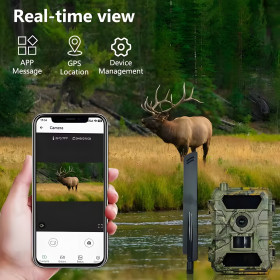
That design suits places a mains-powered security camera cannot reach. A trail camera runs for weeks on batteries, needs no Wi-Fi and sits quietly on a post or tree. A 4G cellular trail camera can also send pictures to your phone, which turns a wildlife tool into a useful rural alert system.
The limits are clear. A card-only model gives no live view and you only see events when you collect the card. There is no siren, no two-way audio and no link to an alarm panel. If you want a deterrent, a dedicated system is the better tool. If you want evidence from a remote spot, a trail camera does the job. Some people already use garden wildlife cameras, and the same units can cover a shed door too.
Trail camera vs security camera: key differences
A trail camera can cover much of what a basic security camera does, but the two are built for different jobs. A trail camera works alone in a field or outbuilding with no mains power or Wi-Fi, while a security camera expects both and usually records far more footage.
| Feature | Trail camera | Security camera |
|---|---|---|
| Power | AA batteries or a solar trail camera panel, often lasting weeks to months depending on triggers | Mains or PoE, so power is constant |
| Connectivity | SD card only, or a 4G cellular trail camera sending photos where there is a signal | Wired network or home Wi-Fi |
| Recording | Motion-triggered photos or short clips | Continuous recording or longer motion clips |
| Night vision | No-glow IR is hard to spot, though images are less sharp than white or standard IR. See night vision wildlife cameras | Standard IR with a visible red glow, which can also act as a deterrent |
| Alerts | App or email notifications on 4G models | App alerts, plus professional monitoring on some systems |
When a trail camera is the right choice for security
A trail camera suits security work best where mains power, broadband and a fixed mounting point are missing.
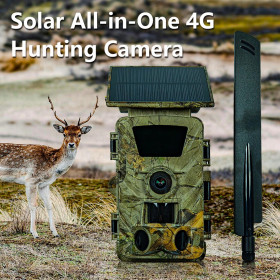
- On a remote field gate, woodland track or isolated barn, a battery unit runs for weeks without cabling, and a solar trail camera can extend that further where the site gets decent daylight.
- Where there is no Wi-Fi, a 4G cellular trail camera can send pictures to your phone, so you hear about a visitor while there is still time to act.
- A small, camouflaged body with a no-glow infrared flash is hard to spot, which helps when you want to record who comes and goes rather than scare them off.
- The same camera records badgers, foxes and deer on quiet nights, so one unit can cover both wildlife interest and property checks.
- Several trail cameras usually cost far less than wiring a conventional system across acres, and you can move them as problems shift.
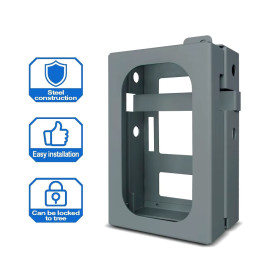
- Theft is a known risk with unattended kit, so a steel security housing is worth fitting on exposed sites.
Choosing the best trail camera for security
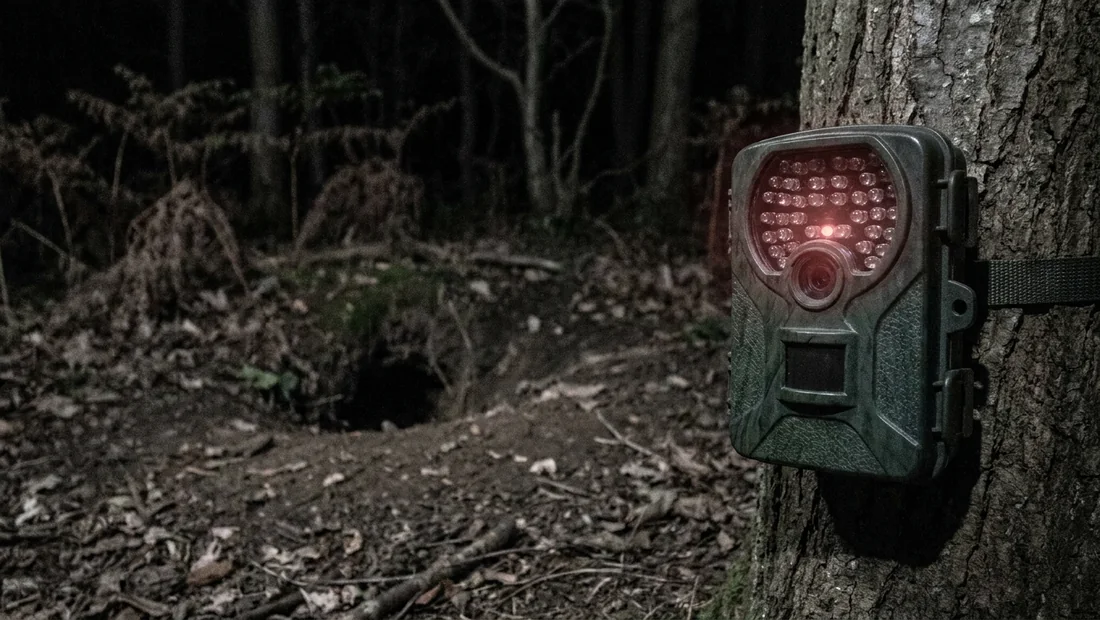
For surveillance work, a 4G model with a 940nm no-glow flash is the sensible starting point. Low-glow 850nm units show a faint red glow that a person looking toward the camera can spot, which invites theft or tampering. A 940nm flash is invisible to the eye, though images are usually a little darker and the range a little shorter. Cellular matters because an SD card only tells you what happened after the thief has gone. A model such as the 4G cellular trail camera with 30MP stills, 4K video and a 940nm no-glow flash sends pictures to your phone, so you can act on them.
Resolution helps most when you need to identify a face or a number plate, but it only counts if the lens and sensor can use it. Check the detection range and trigger speed too. A wide field of view suits a yard or the front of a barn. A narrower view with a longer reach suits a gateway or a track, where people pass at a known spot. Models like the NaturaVision 5K Pro 4G with 30m night vision are worth a look if you want both cellular alerts and good night range.
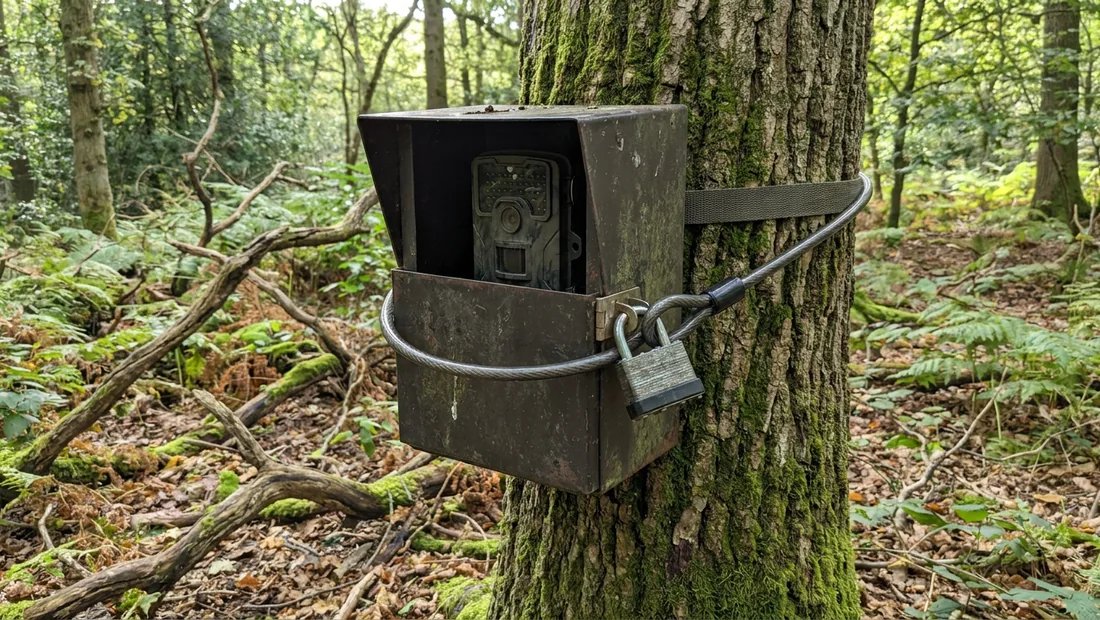
Look for an IP66 rating, since rain, frost and mud are a constant feature of the British countryside. Solar charging, as on the NaturaTrack 5K Solar 4G, cuts battery trips to remote sites. Finally, add physical protection. A steel housing and a locking cable make theft much harder, and they cost far less than replacing a stolen camera.
How to set up a trail camera for security: step by step
choose a spot that covers the entry point
Look for the place everyone has to pass: a gate, a barn door, a gap in the hedge or the track into a field. Stand where an intruder would stand and note which way they face. You want faces and vehicles coming towards the lens, not walking across it.
Mount it at 2 to 3 metres and tilt it down
Height keeps the camera out of casual reach and makes it harder to spot. Tilt it slightly downwards so the detection zone covers the ground where people walk. A metal tree bracket with a ball head makes fine angle adjustments easy on a post, beam or trunk. Clear any grass or branches in front of the lens, as moving leaves cause false triggers.
Aim away from roads and neighbours
Point the lens at your own gate, yard or building, and keep public paths, roads and neighbouring gardens out of frame. Use a tree or the bracket angle to narrow the view if needed. This protects other people's privacy and cuts down on pointless images.
Set sensitivity and interval
Start with medium sensitivity, and go high only if the camera sits well above head height or the approach is long. For security, choose a burst of 2 or 3 photos or a short video of 10 to 20 seconds, with an interval of 5 to 10 seconds. Pick the no-glow infrared setting if your camera has one, so nothing visible flashes at night.
Lock it down
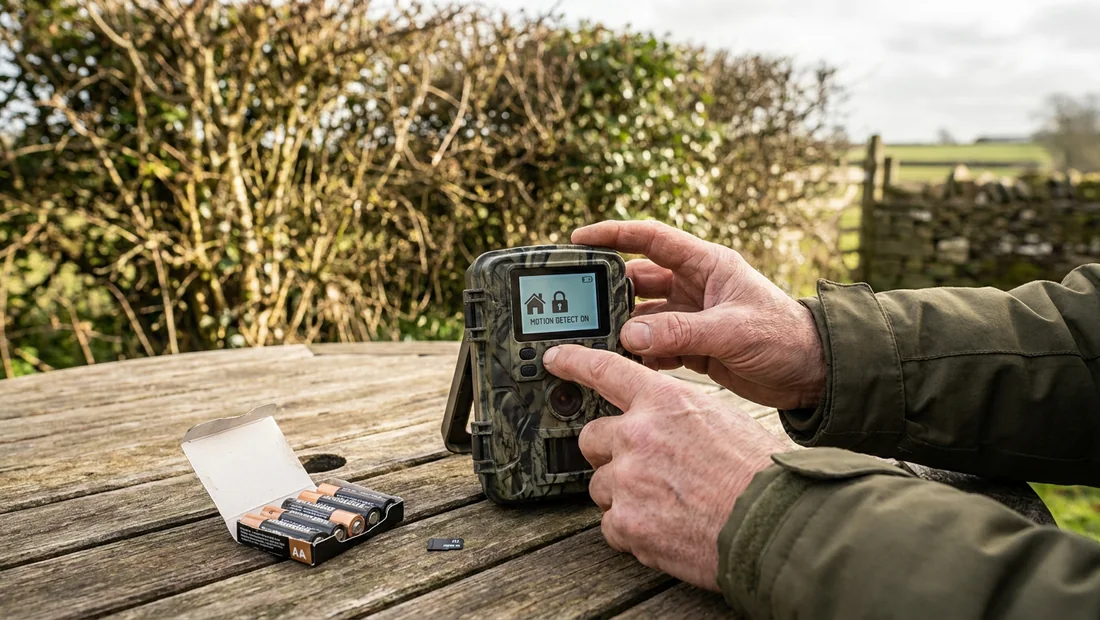
turn on password protection if the camera offers it. Fit a key-lock security cable around the post or tree, and use a good microSD card that suits the camera's stated capacity limit. Format the card in the camera before you start.
Test with a walk-by
Arm the camera, then walk the approach at normal pace, then again at the edges of the frame. Check the images for sharpness and framing, and note how early the camera triggers. Adjust and repeat. Check again after a few days, as wind, growth and sun can change what the camera sees.
Legal and privacy considerations
Pointing a trail camera at your own land is lawful, but footage of people is personal data under UK GDPR and the Data Protection Act 2018. Frame the shot so it covers only your gate, yard or barn door. Avoid public footpaths, the road and your neighbours' gardens or windows. If a camera captures a right of way, angle it down or move it. Cameras set to record audio raise the bar further, so switch sound off unless you have a clear reason.
Covert placement may be used to catch thieves, but it does not remove your duties. If staff, contractors or visitors can be filmed, put up a clear sign at the entrance saying who operates the camera and why. Tell employees in writing. Domestic-only use may fall outside some rules, yet a camera covering anything beyond your property usually does not.
Treat the SD card like any other record. Keep it in a locked place, protect any app or cloud account with a strong password, and delete footage you do not need. Keep footage only as long as you need it, and clear it once any incident has been reported to the police. If you also use the camera to watch wildlife, keep it away from badger setts and nests, and visit at dawn or dusk as little as possible.
Recommended trail cameras for security
Four items from the Game cams catalogue suit security work, and each covers a different job.
- For checking a gate or yard from your phone, the NaturaVision 5K Pro 4G Trail Camera with 30m night vision sends images over the mobile network, so you do not have to walk out to pull an SD card.
- For a barn or field entrance that has no power, the NaturaTrack 5K Solar 4G Trail Camera uses a solar panel to top up its battery, which suits a long deployment that you can leave alone for weeks.
- For covert watching, choose a no-glow model so the infrared flash stays invisible to anyone approaching in the dark. Check the product page for the flash type before you order.
- For theft protection on the camera itself, the steel security housing for the 4G 36MP trail camera shields it from casual tampering, and the 1.75m security cable with key lock tethers it to a post or tree.
Our picks
A trail cam will do the job of a security camera on a shed, barn or gateway, provided you mount it about 2.5 metres up, angle it down at the approach and keep the view on your own land. Choose a 940nm no-glow model so it is very hard to spot when it fires at night. If there is no Wi-Fi, a cellular unit sends pictures to your phone, and our 4G cellular trail cameras are a sensible place to start.
Secure your property with a trail camera
Browse our selection of 4G and no-glow trail cameras, plus security accessories, with free tracked delivery.
View 4G Cellular Trail CamerasFrequently asked questions
Can a trail camera be used as a security camera?
Yes, it works well on sites with no mains power, such as a barn, allotment or empty building. A trail camera records only when something triggers its sensor, so it gives no continuous footage. It suits catching who visited and when. It is a poor match for watching a front door all day.
Do trail cameras work at night for security?
Yes. Trail cameras use infrared LEDs to record in the dark, and no-glow models emit light almost invisible to the human eye. A person is unlikely to spot the camera from its flash. Footage is usually black and white, and range is usually shorter than the maker's claim, so test it at your actual distance.
How do I hide a trail camera for security?
Mount it high, around 2 to 3 metres, angled slightly down, so it sits out of casual reach and sight. Choose a camouflage model, tuck it against a post or tree trunk, and fit a steel lock box with a cable. Trim loose strap ends, since dangling webbing catches the eye.
Can I get live alerts from a trail camera?
Only with a cellular (4G) or Wi-Fi model. These send photos to a phone app shortly after a trigger. A standard camera stores images on an SD card until you collect it. Check mobile signal at the exact spot first, because a weak connection means delayed or missing alerts.
Is it legal to use a trail camera for security in the UK?
Generally yes, on your own land, but data protection rules can apply if the camera captures people beyond your boundary. Point it away from public paths, roads and neighbours' homes, and consider a sign. Rules vary by situation, so check current ICO guidance or seek advice if unsure.
Related posts
 Digital Camera Batteries Rechargeable: UK Buyer's Guide
 Bluetooth Trail Camera: How It Works and What to Buy
 IR Illuminator for Security Cameras: What It Does and Which to Pick
 Barn Owl Camera: How to Choose and Set One Up in the UK
 Best Places to Take Wildlife Photos in the UK: A Field Guide