
Digital Camera Batteries Rechargeable: UK Buyer's Guide
Yes, most digital cameras run well on rechargeable batteries, but the type must match what the camera was built for. Cameras with a proprietary pack need that exact lithium-ion pack, while AA models take low self-discharge NiMH cells. Trail cameras are a special case, because cold weather and long gaps between visits make the choice of cell matter more.
This guide is for garden wildlife watchers, farmers, deer managers and anyone leaving a camera on a gatepost, barn wall or field edge for weeks. It helps you pick a cell type that suits your model, estimate how long a charge will last, and cut down on flat batteries in winter. It also shows how to plan your power supply so you swap cells less often.
In short
- Most digital cameras take a Li-ion pack or AA cells. Check the manual before you buy anything.
- Rechargeable AA cells (NiMH) can replace alkalines in many devices, but check the voltage the camera expects.
- Cold weather, infrared flash, video and 4G transmission all shorten battery life.
- For a camera left outdoors, solar charging can reduce the number of battery swaps and visits.
Can you use rechargeable batteries in a digital camera?
Yes, in most cases you can. Many digital cameras are built around a rechargeable Li-ion pack, and many others take AA cells that can be alkaline or NiMH. The quickest check is the battery compartment itself, where the cell type is usually moulded into the plastic or printed on a label. The manual will confirm it, and the maker's website usually has a PDF copy if yours has gone missing.
Cameras with a Li-ion pack need that exact pack, or a compatible one of the same shape and voltage rating. Cameras that take AAs are more forgiving, but there is one catch. A NiMH cell gives about 1.2V, while an alkaline cell gives about 1.5V. A handful of cameras, including some trail cameras, read that lower voltage as a weak battery and show a low-battery warning early, or shut down while the cells still hold charge. If that happens, the cells are not faulty. The camera is just reacting to the lower voltage. Check the manual for a battery type setting. If you want a power option designed for outdoor use, see our trail camera accessories.
Two habits prevent most problems. Never mix old and new cells, or different chemistries, in the same camera, because the weakest cell drags the rest down and can leak. And never force a battery that does not fit. If it needs pushing, it is the wrong size or the wrong way round, and the contacts can be damaged.
Li-ion vs NiMH AA: which rechargeable battery should you choose?
Choose Li-ion if your camera takes a shaped battery pack, and low self-discharge NiMH if it takes AA cells. The camera usually makes the decision for you, so check the battery compartment and the manual before buying anything. The table sets out how the main options differ in practice.
| Type | Where it fits | Strengths | Watch out for |
|---|---|---|---|
| Li-ion camera pack | Cameras built around one model-specific battery | Light, holds its charge well in storage, easy to top up | Shape and connector are specific to the camera, so spares must match exactly |
| NiMH AA (low self-discharge) | Trail cameras and flashes that take AA cells | Easy to find, reusable many times, charged cells keep their charge in storage | Lower voltage than alkaline, which some cameras read as a low battery warning early |
| 18650 Li-ion cell | Solar power banks and battery boxes feeding a camera | Compact and suited to steady trickle charging from a panel | Needs a proper holder or power bank; a loose cell cannot simply be dropped into a camera |
| Lithium AA (not rechargeable) | Cold sites where NiMH struggles (non-rechargeable option, for comparison only) | Copes better with frost than most rechargeable AAs | Not rechargeable, so it costs more over a season |
Buy from a seller you can trace, and be wary of unbranded cells with huge capacity figures printed on the label. A genuine AA NiMH cell has a limited capacity, so a figure far above that of well-known brands is likely inflated. Cheap cells also tend to sag under load, which is a problem when an infrared flash fires at night.
If you plan to run a camera from a solar panel, an 18650 pack is a common choice. Two examples are a solar charger with a foldable panel and 18650 power bank, and a solar charger with an 18650 battery box.
How long do rechargeable camera batteries last?
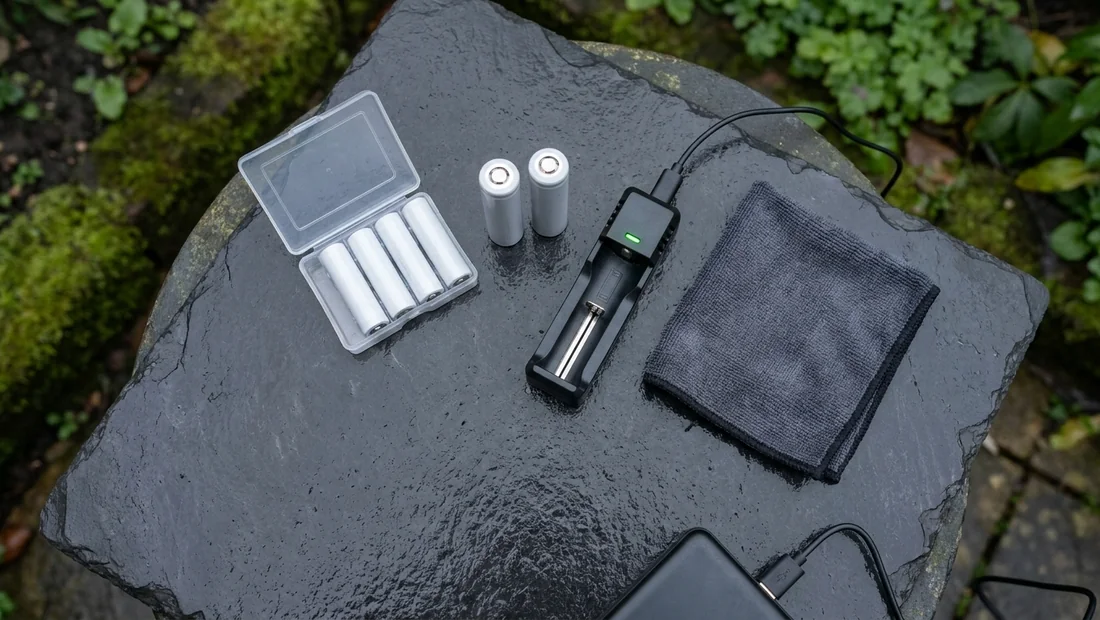
A rechargeable battery lasts two different ways: how long it runs on one charge, and how many years it stays useful before it needs replacing. Run time depends on the cell's capacity, printed in mAh on the label, and on what you ask of the camera. Flash, video, a bright screen and constant Wi-Fi all take more power than quietly waiting for a shot. A camera that mostly sleeps will go much further on the same cells than one filming clips all night. Treat any quoted figure as a rough guide, and judge by how you actually use the camera.
Lifespan is counted in charge cycles. Each full discharge and recharge wears the cell a little. Heat is the main enemy, so never leave a pack on a hot car dashboard or charging on a sunny windowsill. Running a cell completely flat again and again also shortens its life, and so does simple age, even if the battery sits in a drawer. Li-ion packs should not be stored empty. Even low self-discharge NiMH cells lose some charge over time, so check them before use.
Cold mornings can catch people out. A battery that seems flat at dawn, with the camera dead or showing a low-battery warning, can recover once it warms up indoors. The cold slows the chemical reaction inside the cell, so it cannot deliver power as well, yet most of the charge is still there. Keep spares in an inside pocket on winter checks and swap them in warm.
A worn battery gives itself away. Runs get noticeably shorter, the cell gets hot quickly while charging or in use, or the case starts to bulge. Stop using a swollen cell at once and take it to a proper battery recycling point. Do not puncture it or try to charge it again. To track age, write the purchase date on each cell with a marker or a small label. When one in a set runs down far sooner than the others, it is the one to retire.
Why outdoor and trail cameras drain batteries faster
Trail cameras empty their batteries faster than a compact on a shelf because most of the drain comes from triggers, night lighting and radio, not from the hours the camera spends waiting.
- Infrared flash at night is the biggest single draw, because every nighttime photo or clip needs the LEDs to fire for as long as the camera is recording.
- Standard IR cameras use LEDs of around 850 nm, which show a faint red glow and usually reach further. No-glow 940 nm LEDs are far less visible to animals and people but need more power for the same brightness, so a busy night spot can drain cells quickly either way. You will find both types in our night vision wildlife cameras.
- High trigger sensitivity in a windy spot causes false triggers, and a camera pointed at a hedge, bracken or a swinging gate can fire hundreds of times overnight with nothing in the frame.
- Video clips draw more than stills, since the sensor, processor and IR stay on for the whole clip, and 4K recording adds a heavier load and fills the SD card sooner. If you want that detail, see our 4K and high-resolution trail cameras, and expect to check the power more often.
- Sending images over 4G uses more power than saving to an SD card alone, because the modem has to find a signal and upload each file. A weak signal makes it work harder and drains cells further.
- Cold nights and damp reduce the usable charge in any battery, and NiMH cells in particular can read flat on a frosty morning and recover once they warm up indoors.
Most of this can be fixed when you set up the camera. Lower the sensitivity one step at a time in a breezy spot, and set shorter clips, or stills only, if you do not need footage. Walk the field of view when you set up and cut back or tie off any branch, bramble or tall grass that will move in front of the lens. Fewer empty triggers mean fewer nighttime IR flashes, which is where the battery goes.
Keep a camera powered without constant battery swaps
A small solar panel wired to the camera's external power input is the simplest way to stop climbing the same hill every few weeks. The panel does not run the camera directly. It trickles charge into a battery pack or the camera's own cells, so the camera keeps drawing from the battery through the night and the panel tops it up during the day. A foldable solar panel with USB-C output suits cameras and power banks that take USB. The 5V 2.5W waterproof foldable panel is another option if your camera accepts 5V input. Some cameras come with the panel built in, and these are covered under solar trail cameras.
Check the camera's accepted power input before you connect anything. Look at the label or manual for the voltage and the type of socket, whether that is USB-C, a DC barrel or a micro USB port. A mismatch can damage the camera, so check the manual or the manufacturer's warranty terms first. If the manual does not state that the port charges the cells, assume it only powers the camera and use a separate battery pack in between.
Placement matters more than panel size. In the UK, face the panel south, clear of branches, hedges and fence posts, because a single shadow across part of the surface cuts the output sharply. Tilt it steeply, almost upright in winter when the sun sits low, and at a shallower angle in summer. Wipe off leaf litter and bird droppings when you visit. Water gets in at the joins, so use waterproof DC cables with sealed connectors, and leave a small loop of slack below the plug so rain drips off rather than running into it.
Once the cables and panel are in place, it is worth securing the camera too. A steel security box in green camo protects the camera from theft and from curious animals, and it keeps the camera steady on its mount. Strap it firmly to a solid trunk or post, as a wobbly mount gives blurred clips and false triggers in wind.
How to charge and care for rechargeable camera batteries
Match the charger to the cell
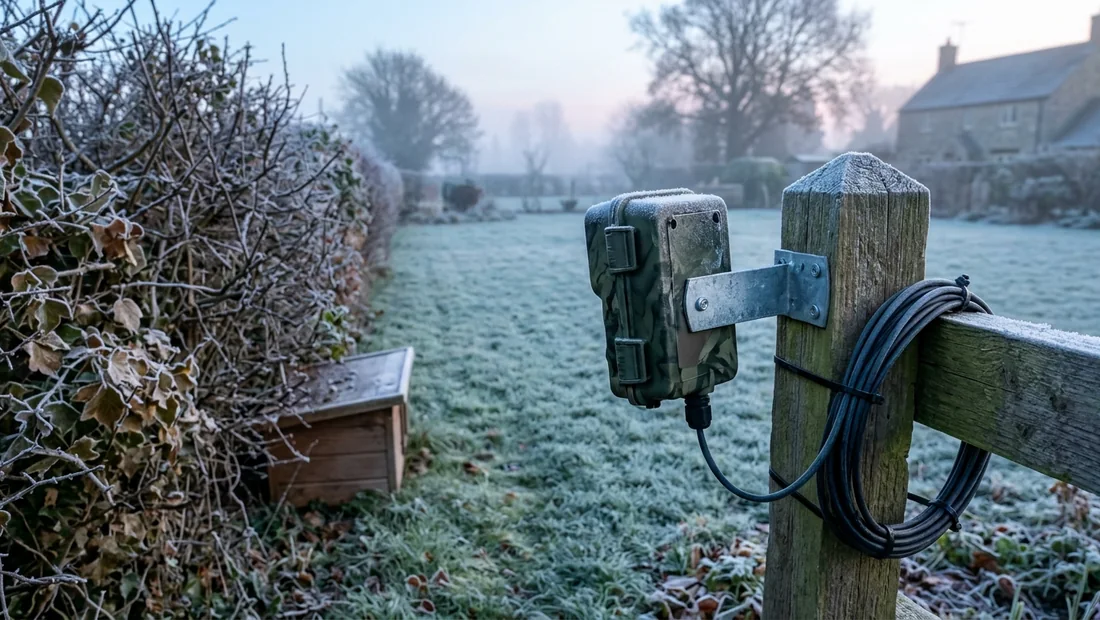
Use a charger made for the chemistry and size you own. A NiMH AA charger will not safely charge a Li-ion pack, and a cheap unit with no per-cell monitoring can overheat a tired cell. Check the label on both charger and battery before you plug in.
Charge indoors at room temperature
Bring the cells into the house and charge them where it is mild. A freezing shed slows charging and can damage Li-ion cells, while a sunny windowsill or a car dashboard cooks them. Let cold cells warm up to room temperature before charging them.
Take cells out of idle cameras
Remove batteries from any camera you will not use for a few months. Even a switched-off device draws a trickle, and a cell left flat for a long time may never recover fully. NiMH cells also lose charge on the shelf, so top them up before you next put them in the camera.
Store them partly charged
Keep spare cells at roughly half charge in a cool, dry cupboard. Avoid lofts, garages and damp outbuildings. A cell stored full and hot ages faster than one kept cool and half full.
Carry spares in a small case
Pack charged sets in a plastic battery case or a small box with dividers. Loose cells in a coat pocket can touch keys or coins, and contact across the terminals causes a short circuit and heat. Mark each set with a matching dot or number in tape so the cells are always used and charged together.
Recycle worn-out cells
Take dead batteries to a UK collection point rather than the household bin. Most larger supermarkets and many council recycling centres have a battery box near the entrance. Tape over the terminals of Li-ion cells first, since damaged cells in a bin or lorry can start fires.
Choosing a camera that suits your battery plan
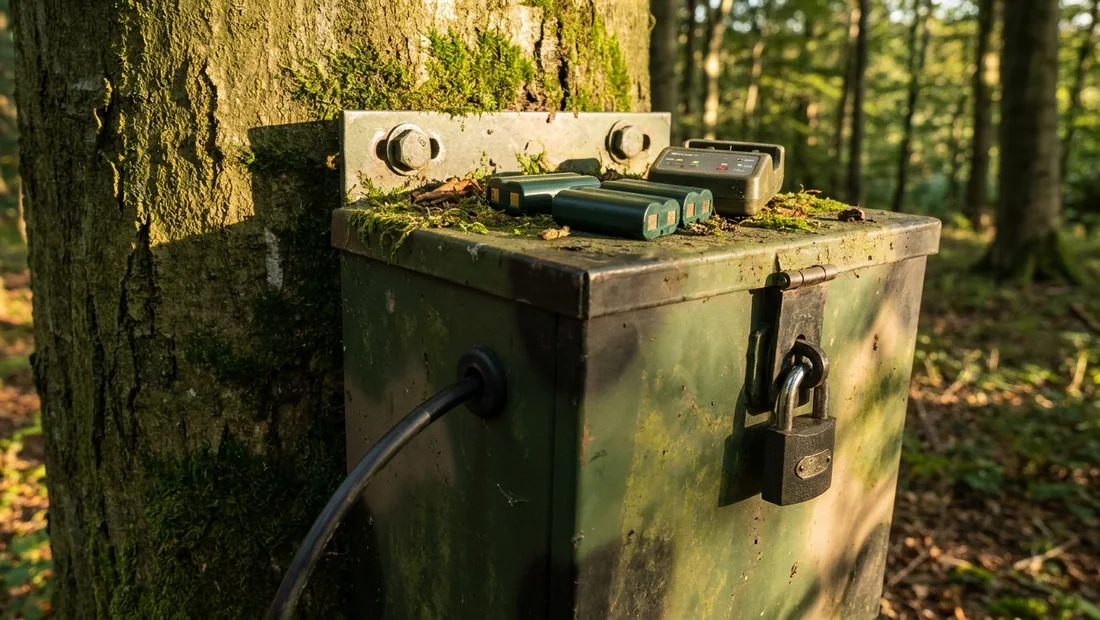
Choose a camera that suits where it will be placed and how often you are happy to walk out to it.
- For a garden, a camera close to a house or outbuilding can be powered through a weatherproof cable and a mains adapter. A solar panel also works if the spot gets plenty of daylight. Our garden wildlife cameras are the place to start.
- A camera on a shady lawn or under a hedge is easier to live with if it takes rechargeable cells you can swap and charge indoors, so check the battery type before you decide on position.
- For a remote field, barn or gateway, a 4G camera with solar charging support saves most of the walking, because photos reach your phone and the panel tops up the battery between visits.
- The NaturaTrack 5K Solar 4G Trail Camera and the Dual Flash 4K Trail Camera with Solar Charging Support both suit that kind of site, so compare them on the power details listed on each page.
- For a feeder, a solar bird feeder camera sits in open space with good light, which is where a small panel works best, and you can see the options in the bird feeder cameras category.
- Each product page lists how the camera is powered, which cells it accepts and whether a panel or external supply can be connected, so read that before you add anything to your basket.
- Panels, cables and mounts are sold separately in some cases, and the trail camera accessories page is a sensible place to check what completes your setup.
- Delivery details and our returns policy are shown at checkout and on our policy pages.
Our picks
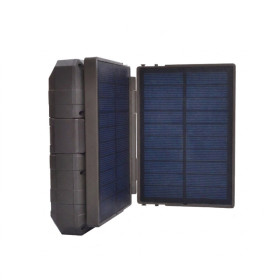
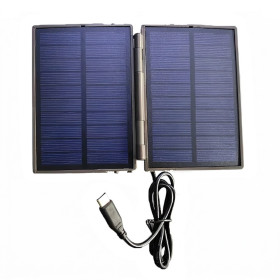
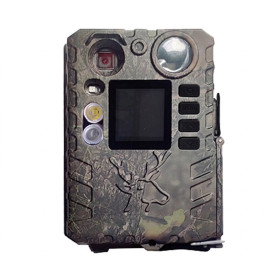
Read the manual first, then buy the cells it names. For a trail camera left out all winter, fit fully charged low self-discharge NiMH AAs if your manual allows them, or lithium AAs for the coldest sites, and check them on each visit rather than guessing. Cold weather, infrared flash and 4G transmission all drain batteries quickly. If swapping batteries keeps pulling you back to the site, a solar panel is worth a look. You can see the options under Trail Camera Accessories.
Power your camera the easy way
Browse solar chargers and power accessories for trail cameras. Every order ships free by tracked Royal Mail from a UK warehouse, with a 30-day money-back guarantee.
View Trail Camera AccessoriesFrequently asked questions
Can I use rechargeable AA batteries in a digital camera?
Usually yes, if the camera is designed to take AA cells. NiMH cells run at 1.2 volts against 1.5 for alkaline ones, so some cameras show a low battery warning early. The manual lists the cell types the camera accepts. Use matched cells of the same age and brand, and never mix them with alkaline ones.
How long does a rechargeable camera battery last?
It depends on capacity, temperature, flash use and video recording, so no single figure applies. Cold drains cells quickly, and video drains them faster than stills. Capacity gradually drops over many charge cycles, and how quickly depends on the battery type and how you use it. When a full charge gives noticeably fewer shots, the cell is ageing and worth replacing.
Are Li-ion camera batteries better than NiMH?
Li-ion packs are lighter, hold more energy for their size and lose charge slowly in storage. They only fit cameras built around that specific pack, though. NiMH AA cells suit any camera or flash that takes AAs, and you can buy them in any shop. Choose by what your camera accepts.
Can rechargeable batteries power a camera flash?
Many external flashes work well on NiMH AA cells, and they can recycle faster between shots than alkaline ones. Fully charged cells matter, as a half-flat set slows the flash noticeably. Check the flash manual first, because some units misread the lower voltage and show an inaccurate battery level.
Can a solar panel keep a trail camera battery charged?
Yes, a solar panel can top up a compatible trail camera or external battery pack when it sits in good light. Check the camera's input type and voltage before buying, as plugs and ratings vary. In the UK, mount the panel facing south, clear of branches, and secure the cable neatly so it is less likely to be noticed or snagged.
Related posts
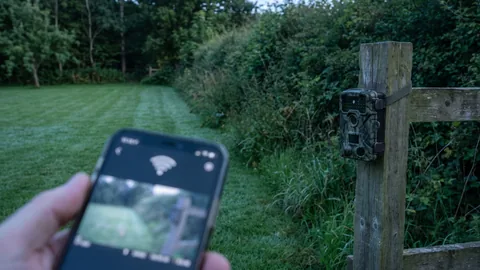 Bluetooth Trail Camera: How It Works and What to Buy
 IR Illuminator for Security Cameras: What It Does and Which to Pick
 Barn Owl Camera: How to Choose and Set One Up in the UK
 Can a Trail Cam Be Used as a Security Camera?
 Best Places to Take Wildlife Photos in the UK: A Field Guide